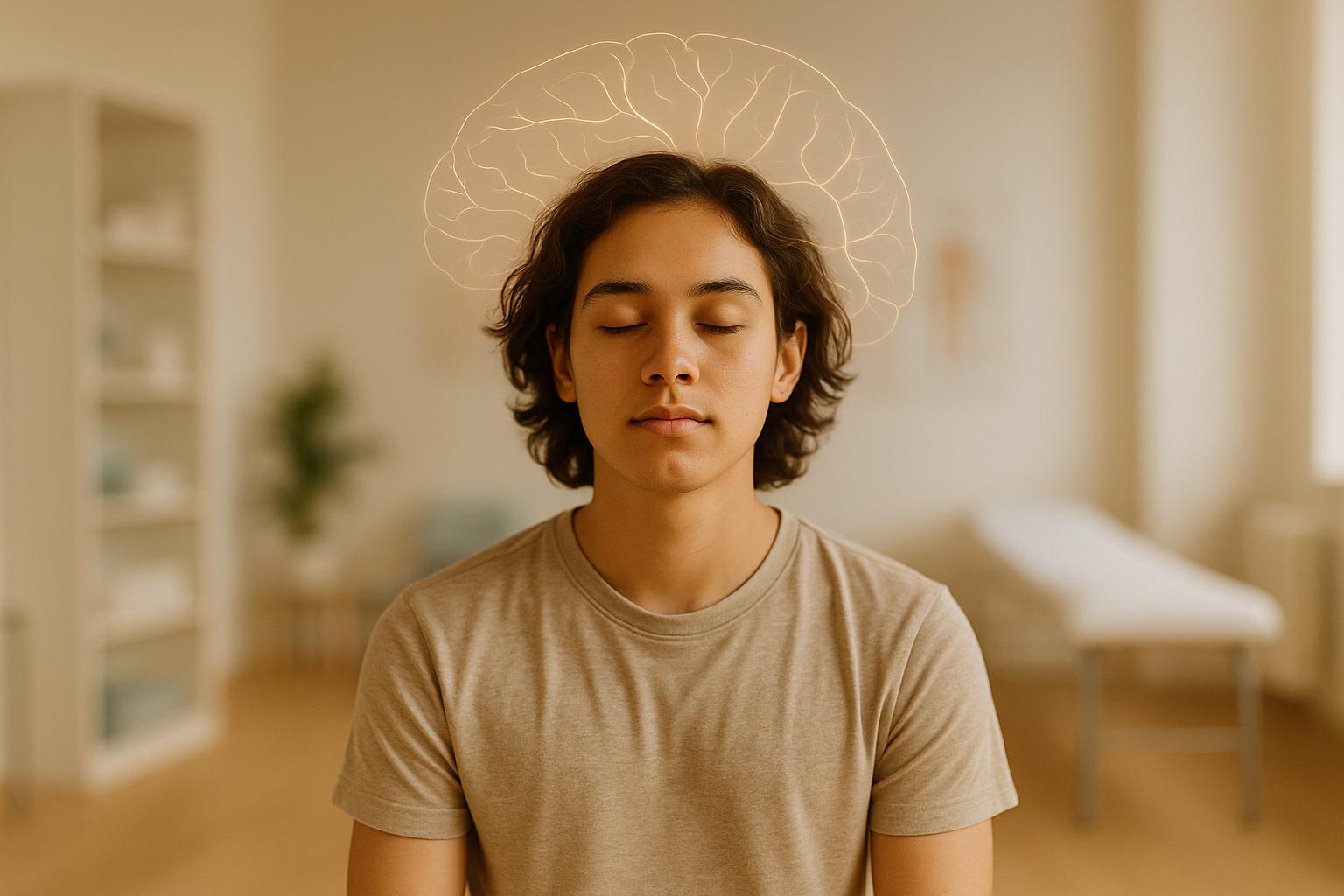
Visualization is a mental practice where patients imagine movements or sensations to stimulate the brain’s neural pathways. It’s proving to be a valuable tool in neurological rehabilitation, especially for stroke recovery, traumatic brain injuries, and chronic pain management. By mentally rehearsing actions, the brain activates areas responsible for physical movement, aiding recovery even when physical activity is limited.
Key Takeaways:
- How It Works: Visualization activates the motor cortex and promotes neuroplasticity, helping the brain rewire itself after injury.
- Benefits: Improves motor function, reduces stress, eases pain, and boosts therapy adherence.
- Evidence: Studies show that visualization can enhance strength by up to 35% and speed up recovery when combined with physical therapy.
- Techniques: Includes motor imagery (mentally practicing movements), kinesthetic imagery (imagining sensations), and guided imagery (structured relaxation exercises).
- Emerging Tools: Virtual reality (VR) and brain-computer interfaces (BCIs) provide immersive and measurable visualization experiences.
Visualization is easy to incorporate into rehabilitation programs and works best when combined with physical therapy and mindfulness practices. Advances in technology are further expanding its potential, offering hope for patients with limited mobility or severe neurological challenges.
The Science Behind Visualization for Neurological Recovery
Visualization taps into the brain’s natural ability to simulate physical movement. When you imagine performing an action – whether it’s raising your arm, walking across the room, or gripping a cup – your brain activates many of the same areas involved in actual movement. These include the motor cortex, premotor cortex, supplementary motor area, and parietal lobes. This overlap is what makes visualization such a powerful tool.
At the core of this approach is neuroplasticity, the brain’s remarkable ability to reorganize and form new neural connections. After injuries like strokes or traumatic brain injuries, some neural pathways can become damaged. Visualization helps rebuild these pathways by repeatedly engaging the same circuits used in physical movement. Even when physical movement isn’t possible, mental rehearsal keeps these circuits active and promotes recovery.
Neuroimaging studies confirm that mental practice closely mirrors the brain activity of actual movement, reinforcing changes in the brain’s structure and function. These findings highlight how visualization can lead to real physical improvements, even for patients with severe mobility challenges.
How Visualization Activates Neuroplasticity
Visualization works by repeatedly stimulating specific neural pathways through mental practice. When you mentally rehearse a movement, you send signals through the same circuits that control physical actions. This repeated activation strengthens existing connections and encourages the formation of new ones – similar to how physical practice builds muscle memory.
Motor imagery, a key component of visualization, activates critical brain areas that maintain or even improve motor function. For individuals with paralysis or severe movement restrictions, visualization offers a way to keep motor pathways engaged. This continued engagement is vital for preventing further deterioration and encouraging recovery. Additionally, visualization may influence the parasympathetic nervous system, helping to reduce stress and calm the limbic system. This creates an environment that supports healing and fosters neuroplasticity.
Clinical Evidence Supporting Visualization
The research backing visualization in neurological rehabilitation is both extensive and growing. A 2014 meta-analysis identified mental imagery as a safe, effective, and affordable intervention for stroke patients. It offers limitless practice opportunities without adding physical strain.
One compelling study revealed that participants who visualized finger movements increased their finger strength by 35% over 12 weeks, compared to a 53% increase in those who performed physical exercises. While physical practice remains more effective overall, these findings demonstrate that mental practice alone can yield significant gains.
In another systematic review of 41 randomized controlled trials, guided and motor imagery were shown to significantly improve gait, balance, and upper limb function in stroke rehabilitation. Patients not only enhanced their ability to walk and maintain balance but also improved in performing everyday tasks. Similarly, a placebo-controlled trial found that stroke patients who practiced visualization experienced greater daily arm use and reduced arm impairment compared to those who did not use such techniques.
Beyond motor function, visualization also appears to enhance sensory processing by engaging multiple senses during mental practice. This helps patients relearn how to interpret touch, balance, and body position. Additionally, it may assist in pain management and improve emotional well-being by reducing anxiety and promoting relaxation.
Emerging technologies are taking these benefits even further. Brain-computer interfaces (BCIs) and virtual reality tools now provide real-time feedback during visualization exercises, boosting neural activation and potentially speeding up recovery. Combining visualization with electrical stimulation in BCI systems has also shown promising results in real-world cases.
The growing body of evidence makes it clear that visualization is more than just a supplementary technique – it’s a critical component of neurological rehabilitation. Whether used on its own or alongside physical therapy, visualization harnesses the brain’s ability to rewire itself, offering measurable progress and renewed hope for patients recovering from neurological injuries. Up next, we’ll dive into common visualization techniques used in rehabilitation.
Common Visualization Techniques in Neurological Rehabilitation
Visualization techniques in neurological rehabilitation are as diverse as the goals they aim to achieve. From restoring motor function to easing stress, these methods provide patients and therapists with tailored tools to address specific recovery needs. By targeting both movement and sensory processing, these approaches play a key role in supporting the brain’s ability to adapt and recover.
Motor and Kinesthetic Imagery
Motor imagery involves mentally practicing movements without physically performing them. For instance, when a patient imagines reaching for a cup, opening a door, or walking, the brain activates the same neural pathways involved in actual movement. This includes areas like the primary motor cortex, supplementary motor area, and basal ganglia. By mentally rehearsing these actions, patients reinforce motor networks and strengthen the connections essential for physical movement.
This technique is particularly useful for individuals with limited mobility. Even if physical movement isn’t possible, motor imagery keeps critical neural pathways active and engaged.
Kinesthetic imagery takes this concept a step further by focusing on the sensations associated with movement. Instead of just visualizing walking, patients also imagine the feeling of shifting their weight, the contraction of muscles, and the texture of the ground beneath their feet. This engages the sensorimotor and somatosensory cortices, which are vital for sensory integration and body awareness.
For stroke survivors dealing with sensory deficits, kinesthetic imagery can help improve coordination and address sensory loss. It supports neuroplasticity and complements physical therapy. Therapists often begin with simple exercises, like imagining bending a finger or lifting an arm, and gradually progress to more complex tasks, such as buttoning a shirt or climbing stairs. This ensures the mental practice remains both challenging and achievable throughout the recovery process.
Guided Imagery for Relaxation and Focus
Guided imagery involves structured mental exercises led by a therapist or a recording. Unlike motor imagery, which focuses on movement, guided imagery often centers on calming scenarios or visualizing the body’s healing process. A therapist might guide a patient through imagining a serene walk in the woods, warm light spreading through injured areas, or successfully achieving therapy milestones.
This technique activates the prefrontal cortex, which plays a key role in managing emotions. By creating vivid mental experiences, guided imagery can reduce anxiety, lower stress, and improve emotional well-being. Many clinics pair guided imagery with physical therapy to help patients relax, build confidence, and stay focused during treatment. In fact, some clinics have reported up to 28% faster progress when guided imagery is combined with mindfulness practices.
Sessions usually last 10–20 minutes and are conducted about three times a week, though this can be adjusted based on the patient’s needs. Therapists often provide recorded scripts or videos so patients can practice at home. The exercises are also customized to address individual challenges – whether it’s imagining smooth arm movements for stroke recovery or visualizing pain melting away for those with chronic discomfort. Additionally, advancements in technology are opening new doors for enhancing these mental practices.
Technology-Assisted Visualization
Emerging technologies like virtual reality (VR), brain-computer interfaces (BCI), and robotic-assisted systems are revolutionizing visualization techniques, offering immersive experiences that go beyond traditional methods.
VR allows patients to practice movements in controlled virtual settings. For example, a stroke patient might use VR to simulate reaching for objects in a virtual kitchen, engaging multiple senses in the process. Therapists can also adjust the difficulty of tasks to match the patient’s progress, ensuring exercises remain challenging but achievable.
Brain-computer interfaces represent another promising tool. These systems detect brain signals associated with imagined movements and can use electrical stimulation to assist with physical actions. In one case, a stroke patient regained partial arm function by combining visualization with electrical stimulation.
Robotic devices add another layer by providing biofeedback. As patients imagine moving a limb, these devices offer gentle assistance or resistance, helping to reinforce the connection between mental practice and physical sensation. This feedback sharpens the accuracy of mental imagery, giving patients a clearer sense of what correct movement feels like.
Technology-assisted visualization not only boosts patient engagement but also provides measurable data on progress. By monitoring neural activation patterns, therapists can fine-tune treatment plans as needed. While these advanced tools don’t replace traditional techniques, they significantly expand the possibilities for neurological rehabilitation, offering a more comprehensive and dynamic approach to recovery.
Benefits and Applications of Visualization
Visualization offers a range of measurable benefits for physical recovery, emotional well-being, and motivation, particularly in neurological rehabilitation.
Key Benefits of Visualization
Improved Motor Function and Strength
Visualization can significantly enhance motor function, even when physical movement is restricted. This is because mental practice activates many of the same neural circuits as actual movement. For example, a 12-week study revealed that finger strength improved by 53% with physical exercise and by 35% with visualization alone. Stroke survivors who used detailed visualization techniques achieved motor skill recovery 40% faster than those who didn’t. A study at the Lerner Research Institute in Cleveland demonstrated that stroke patients with arm impairments (an average of 3.5 years post-stroke) showed increased daily arm use and reduced impairment after practicing visualization. This involved imagining tasks like reaching and grasping objects, sometimes paired with advanced tools like brain-computer interfaces and electrical stimulation to assist movement.
Stress Reduction and Emotional Regulation
Guided imagery, a popular visualization technique, helps patients cope with the emotional hurdles of neurological recovery. It has been shown to improve mood, reduce anxiety, and build resilience. Visualizing calming scenes or positive outcomes can also activate the parasympathetic nervous system, which supports the body’s ability to heal and adapt through neuroplasticity.
Pain Management
For individuals dealing with chronic pain, visualization provides a drug-free alternative to manage discomfort. Techniques like guided imagery and body scan visualization can shift pain perception and reduce markers of inflammation. For instance, patients recovering from hip replacement surgery reported a 22% drop in pain medication use when incorporating visualization into their recovery process.
Enhanced Therapy Adherence
Visualization can make therapy goals feel more achievable, boosting motivation and engagement. By mentally rehearsing success, patients are more likely to stick to their rehabilitation routines. This approach has been linked to mobility gains of up to 28% faster than standard therapy alone.
These benefits highlight the practical applications of visualization in addressing various neurological challenges.
Applications in Neurological Conditions
The effectiveness of visualization extends to a variety of neurological conditions, offering targeted strategies for recovery and management.
Stroke Recovery
Visualization has become a critical tool in stroke rehabilitation, especially for patients with limited physical movement. Through motor imagery, patients mentally rehearse tasks like reaching for objects or walking, which stimulates neuroplasticity and helps rebuild damaged neural pathways. Studies show that incorporating visualization into stroke therapy can lead to 15% quicker mobility improvements compared to physical therapy alone.
Traumatic Brain Injury (TBI)
For those recovering from TBI, visualization – particularly guided and kinesthetic imagery – can aid in restoring disrupted neural connections. By mentally practicing daily activities like dressing or cooking, patients support both motor recovery and cognitive skills such as planning and sequencing.
Chronic Pain Management
Visualization also plays a significant role in managing chronic pain, a common issue in neurological conditions. Patients can use mental imagery to focus on healing scenarios, such as visualizing warmth or light soothing painful areas. This technique helps redirect attention away from pain signals and complements other pain management strategies.
Developmental Disorders: ADHD and Autism
Visualization has shown promise in helping individuals with developmental disorders like ADHD and autism. Guided imagery can improve focus, emotional regulation, and behavioral outcomes. For example, a child with ADHD might imagine completing homework calmly, while someone with autism could mentally rehearse social interactions in a controlled, safe environment. These exercises build confidence and provide mental frameworks for navigating daily challenges.
At HML Chiropractic & Functional Care, visualization is combined with functional neurology to address conditions like ADHD, autism, traumatic brain injury, and chronic issues. Their patient-focused approach integrates mental practice with other therapies to promote overall neurological health and recovery.
Integrating Visualization Into Neurological Care
Visualization isn’t a standalone solution. Its true potential emerges when combined with other therapeutic methods, creating a well-rounded approach to neurological recovery. By addressing both the physical and mental sides of rehabilitation, this integration often leads to better results than relying on a single treatment method. These combined strategies build on the visualization techniques discussed earlier, forming a more complete recovery plan.
Combining Visualization with Other Therapies
Visualization becomes even more effective when paired with complementary therapies. Together, these methods amplify each other, speeding up recovery and enhancing overall function.
Physical Therapy and Motor Imagery
When visualization is paired with physical therapy, it creates a powerful tool for motor recovery. Mentally rehearsing movements before or during physical exercises helps prepare the nervous system for action. This mental practice activates the same brain areas involved in actual movement, making physical exercises more effective.
For example, a 2014 randomized trial conducted at the Lerner Research Institute in Cleveland studied stroke patients with arm impairments. Those who practiced visualizing limb movements alongside their physical therapy showed marked improvements in daily arm use and reduced impairment compared to patients who only received physical therapy. This study highlights visualization as a safe, affordable, and endlessly repeatable addition to rehabilitation.
Mindfulness and Guided Imagery
Combining mindfulness with visualization taps into neural pathways that support attention and mental imagery. This pairing can ease anxiety, improve emotional control, and enhance the overall therapeutic impact. The process is simple: patients focus on their breathing while visualizing positive outcomes. This dual activity engages the prefrontal cortex (responsible for attention and planning) and the parasympathetic nervous system (which promotes rest and recovery), fostering both emotional and physical healing.
Technology-Assisted Visualization
Modern tools like virtual reality (VR) and brain-computer interfaces (BCI) take visualization to the next level. These technologies provide immersive, real-time feedback, detecting imagined movements and even triggering electrical stimulation to assist with physical actions. In one case, a BCI system paired with visualization led to notable improvements in arm function when combined with electrical stimulation. Such advancements are especially beneficial for patients with severe mobility challenges, offering new opportunities for rehabilitation.
Functional Neurology Integration
Functional neurology focuses on how different parts of the brain communicate and work together. By integrating visualization with functional neurology assessments and treatments, clinicians can target specific neural pathways that need strengthening. The benefits are clear: improved neuroplasticity, reduced anxiety, heightened patient engagement, and faster functional progress, all through non-invasive and cost-effective methods. This approach forms the foundation of HML Chiropractic & Functional Care’s tailored treatment protocols.
HML Chiropractic & Functional Care’s Approach to Neurological Rehabilitation
HML Chiropractic & Functional Care combines functional neurology, chiropractic care, and functional medicine to create personalized neurological rehabilitation plans. Visualization techniques are seamlessly integrated into these customized treatment strategies.
Patient-Centered Assessment and Planning
The process begins with a detailed evaluation of each patient’s health history and concerns. This personalized approach ensures that treatment plans are tailored to the patient’s neurological condition, recovery goals, and preferences. At HML Chiropractic & Functional Care, this thorough assessment is particularly important for complex conditions like traumatic brain injuries, ADHD, autism, and learning disabilities – areas where a one-size-fits-all approach often falls short.
Customized Visualization Integration
Rather than using generic visualization exercises, HML Chiropractic & Functional Care adapts mental imagery techniques to fit each patient’s unique needs and stage of recovery. For instance, a patient recovering from a traumatic brain injury might start with simple relaxation-focused imagery and gradually move to more challenging motor imagery as they progress. Combining visualization with hands-on therapies opens multiple pathways for neuroplastic change. For someone with ADHD, this might involve visualizing focus strategies while also undergoing functional neurology treatments that support executive function.
Beyond Recovery to Long-Term Well-Being
The ultimate goal goes beyond short-term recovery. HML Chiropractic & Functional Care empowers patients with the tools and knowledge to continue their progress at home. By teaching visualization techniques that can be practiced independently, patients become active participants in their recovery journey. This holistic approach addresses not just the neurological condition but also the emotional, physical, and lifestyle factors that influence healing. Through personalized care, the practice helps patients achieve better functional and emotional outcomes than standardized methods might allow.
For individuals who haven’t found success with other treatments, this integrated, patient-focused approach provides a comprehensive way forward. By leveraging the brain’s natural ability to adapt through visualization and combining it with complementary therapies, patients gain a path to meaningful recovery and lasting well-being.
Conclusion
Visualization is an effective tool in neurological rehabilitation, backed by solid evidence. It works by activating the same brain areas responsible for physical movement. Studies show impressive results: stroke patients practicing visualization with multisensory details achieved motor skill recovery 40% faster, and participants who visualized finger movements for 12 weeks increased their strength by 35% – without any physical exercise. These findings highlight the real impact of visualization in recovery.
What makes visualization stand out is its adaptability. It’s non-invasive, affordable, and can be practiced almost anywhere, making it a perfect complement to traditional rehabilitation methods. When paired with physical exercises and mindfulness, visualization enhances neuroplasticity and speeds up recovery. Technology like virtual reality and brain-computer interfaces can take its benefits even further.
For the best results, it’s essential to work with experts who can integrate visualization into a personalized care plan. HML Chiropractic & Functional Care takes this approach seriously, combining functional neurology, chiropractic care, and functional medicine to address not just neurological issues but overall well-being. Their customized assessments ensure visualization techniques are tailored to each patient’s needs, whether you’re managing ADHD, autism, traumatic brain injuries, learning disabilities, or chronic health challenges. This personalized care not only accelerates recovery but also empowers patients to maintain progress on their own.
If you’re looking for a way forward in your neurological recovery – especially if you’ve been told there are no more options – visualization-based care could be the breakthrough you need. By combining evidence-backed visualization techniques with other therapies and guided practice, you can tap into your brain’s ability to rewire itself and achieve meaningful, lasting improvements in your quality of life.
FAQs
How does visualization support stroke recovery, and how is it different from traditional physical therapy?
Visualization, often referred to as mental imagery, plays an important role in stroke recovery by engaging neural pathways in the brain – even without actual physical movement. This method involves imagining specific movements or activities, which helps the brain reorganize itself through a process known as neuroplasticity. Over time, this mental practice can lead to better motor skills and improved coordination.
What sets visualization apart from traditional physical therapy is that it allows patients to mentally rehearse movements, making it especially useful for those with limited physical mobility in the early stages of recovery. When paired with physical therapy, visualization can strengthen the connection between the brain and body, leading to more effective rehabilitation.
How do technologies like virtual reality and brain-computer interfaces enhance visualization in neurological rehabilitation?
Emerging technologies like virtual reality (VR) and brain-computer interfaces (BCIs) are reshaping neurological rehabilitation by making visualization techniques more engaging and impactful. VR offers patients realistic, controlled environments where they can safely practice motor skills, work on balance, and boost cognitive functions – all while staying immersed in an interactive experience. Meanwhile, BCIs take things a step further by enabling direct communication between the brain and external devices. This allows patients to visualize and control movements, even when their physical abilities are limited.
These technologies aren’t just improving traditional rehabilitation methods – they’re opening up entirely new ways for patients to retrain their brains, enhance neuroplasticity, and make meaningful strides in their recovery.
Can patients safely use visualization techniques at home, and how can they ensure they’re doing it correctly?
Yes, you can safely practice many visualization techniques at home, but it’s essential to approach them with care and a bit of preparation. Start by learning the right methods from reliable sources – this could include advice from your healthcare provider or instructional materials they recommend. Techniques like guided imagery or mental rehearsal are generally straightforward and well-suited for home practice.
To get the most out of your practice, consistency and focus are key. Choose a quiet, distraction-free space and commit a few minutes each day to your exercises. If you’re ever unsure about your progress or technique, reaching out to a professional, such as the team at HML Chiropractic & Functional Care, can ensure you’re on the right track with personalized guidance.