Functional neurology focuses on how the brain works rather than just structural damage, offering personalized treatments to address emotional challenges after brain injuries. Emotional symptoms like anxiety, depression, and mood swings often stem from disruptions in brain networks. Functional neurology uses therapies that promote neuroplasticity – the brain’s ability to rewire itself – to restore emotional balance. Here’s a quick breakdown of how it helps:
- Neuroplasticity: Helps the brain form new connections for emotional recovery.
- Autonomic Nervous System (ANS) Regulation: Balances stress responses to improve emotional stability.
- Vestibular and Vision Therapies: Addresses balance and sensory processing to stabilize mood.
- Neurofeedback and Photobiomodulation: Guide brain activity into healthier patterns and reduce inflammation.
- Personalized Mind-Body Plans: Combines tailored therapies like cognitive exercises, nutrition, and stress management.
These non-invasive methods aim to repair faulty pathways, reduce emotional symptoms, and support long-term healing.
1. Rewiring Emotional Pathways Through Neuroplasticity
How Neuroplasticity Connects the Brain and Body
When the brain experiences an injury, it has an incredible ability to adapt and reorganize itself. This process, known as neuroplasticity, allows the nervous system to rebuild its structure and create new connections. Essentially, the brain can activate secondary networks to maintain function even after trauma disrupts its usual pathways. For emotional recovery, this means the brain can form new “detours” to restore balance, bypassing damaged areas.
The process unfolds over time. Within the first 48 hours, backup networks kick in. Over the following weeks, synaptic plasticity – where neurons form new connections – takes over. Months later, axonal sprouting solidifies these changes, creating long-term pathways. This gradual timeline explains why emotional recovery is a journey, not an instant fix. Physical interventions, such as eye movement exercises, balance training, and controlled breathing, can speed up this process by shifting the body out of a stress response and into a state of repair.
Emotional trauma doesn’t just affect the brain – it impacts the entire nervous system. The limbic system, which acts as the brain’s alarm center, often stays hyperactive after trauma, keeping the body in a prolonged state of stress. Functional neurology uses physical stimuli to influence the neural circuits tied to emotional regulation, helping the body transition from “fight or flight” to “rest and repair”.
Supporting Emotional Recovery After Brain Injuries
Research shows that emotional and motivational stimuli play a key role in shaping how the brain adapts. Studies reveal that these factors enhance brain remodeling by strengthening connections between different brain regions and hubs. The principle is simple: neurons that fire together, wire together. The more intense and frequent the experiences, the faster the brain can reorganize itself.
Functional neurology takes advantage of this natural process. Techniques like vestibular rehabilitation, neurofeedback, and photobiomodulation are designed to stimulate specific neural networks. These therapies also help reduce inflammation, improve blood flow to critical areas, and encourage the brain to “prune” harmful pathways while building healthier ones.
At HML Functional Care, these neuroplasticity-driven methods are incorporated into tailored treatment plans. The goal is to support emotional recovery and promote long-term well-being.
2. Balancing the Autonomic Nervous System for Emotional Stability
Focus on Neuroplasticity and Brain-Body Connection
The autonomic nervous system (ANS) oversees crucial functions like heart rate, breathing, digestion, and temperature regulation. When the system becomes dysregulated – a condition known as dysautonomia – it can lead to symptoms such as light-headedness, migraines, anxiety, and depression. Brain injuries often exacerbate this imbalance, trapping the body in a constant “fight or flight” mode, even when no actual danger exists.
A key player in this process is interoception, the brain’s ability to interpret internal signals from the body. These signals guide the brain in predicting the body’s needs and issuing commands via the ANS to maintain balance. However, a brain injury can disrupt this communication, making it harder to identify and regulate emotions. Research highlights that individuals with acquired brain injuries often experience alexithymia – difficulty recognizing their own emotions – especially when the anterior insula is affected. This breakdown in communication underscores the need for targeted interventions aimed at restoring balance.
Effectiveness in Emotional Recovery After Brain Injuries
Traditional neurology often focuses on structural damage, but this approach can overlook the emotional challenges faced by many patients. For instance, 30% of concussion patients develop post-concussion syndrome, with persistent emotional symptoms that don’t show up on standard scans. This is where functional neurology steps in, addressing what Dr. Mark Allen refers to as “functional aberrations” – misfiring neural pathways identified through advanced imaging techniques like individualized fMRI assessments.
“If you are in a chronic sympathetic state, your vagus nerve and downstream healing processes cannot be activated; as a result, your healing process may remain at a standstill.” – Dr. Sunjya Schweig, California Center for Functional Medicine
Studies suggest that specialized functional neurocognitive treatments can significantly reduce symptoms for 77% of participants. The goal is to shift the body out of sympathetic dominance (the “fight or flight” mode) and into a parasympathetic state, where processes like rest, digestion, and repair can take place effectively.
Incorporation of Functional Neurology Techniques
Functional neurology offers targeted interventions to recalibrate the ANS and support emotional recovery. Techniques like vagus nerve resets help reduce brain inflammation and break the cycle of chronic stress responses. Another tool, heart rate variability (HRV) biofeedback, measures the balance between sympathetic and parasympathetic activity. In one study involving 13 individuals with severe chronic acquired brain injuries, higher low-frequency heart rate activity was linked to improved emotional control. Practices such as controlled breathing exercises, yoga, and Tai Chi also play a role in toning the vagus nerve and promoting healing.
At HML Functional Care, these methods are integrated into personalized treatment plans. By addressing the underlying causes of emotional instability rather than merely managing symptoms, patients can achieve meaningful progress in their recovery.
3. Stabilizing Mood Through Vestibular and Vision Therapies
Focus on Neuroplasticity and Brain-Body Connection
The vestibular system plays a crucial role in maintaining balance and anchoring your sense of self. After a brain injury, disruptions in this system can force the brain to compensate by relying heavily on sight and sound. This added strain can sap the energy needed for emotional regulation.
Interestingly, the brain regions that process vestibular information overlap with those involved in pain perception and emotional processing, like the insula and anterior cingulate cortex. Research from 2017 highlights a two-way relationship: a properly functioning vestibular system supports emotional stability, while emotional states can, in turn, influence physical balance. Advanced imaging techniques, such as ultra-high-field 7T fMRI, have uncovered a “vestibulo-autonomic-nociceptive circuit.” This circuit directly links the balance organs to brain areas responsible for pain and autonomic functions, offering a deeper understanding of how vestibular therapies can impact mood regulation.
Effectiveness in Emotional Recovery After Brain Injuries
Vestibular dysfunction has a profound effect on mood. Studies have linked vestibular issues to conditions like anxiety, depression, and even depersonalization – a sensation of being disconnected from one’s own body. Many individuals recovering from brain injuries describe feelings of being “strange” or “not in control of self”.
“A stable body creates a stable mind: Vestibular Balance linked to Emotional Balance.” – Neuro Frontiers
Vision therapy and oculomotor rehabilitation can work alongside vestibular treatments to enhance recovery. These therapies promote neuroplasticity, reduce inflammation, and help restore the vestibulo-ocular reflex. When this reflex is compromised, the resulting disorientation can often lead to emotional distress.
Incorporation of Functional Neurology Techniques
Functional neurology builds on these insights by using targeted vestibular stimulation to promote balance and emotional well-being. Techniques like spinning chair exercises have been used since the 19th century to treat symptoms such as mania or heightened arousal. Modern advancements include controlled rotation exercises and Galvanic Vestibular Stimulation (GVS), which are precisely tailored to each patient’s neurological needs and must be conducted under professional supervision.
“Vestibular stimulation can modulate mood and hence influence emotions depending on the region of vestibular stimulation.” – Neuro Frontiers
A simple yet effective tool for assessing vestibular health is the Static Balance Test, which involves standing on one leg with eyes closed for 30 seconds. Clinics like HML Functional Care use such assessments to create personalized treatment plans. These plans often combine vestibular rehabilitation with vision therapy to address the unique challenges faced by brain injury patients, reinforcing the broader strategy of using neuroplasticity to support emotional recovery.
4. Regulating Mood with Neurofeedback and Photobiomodulation
Focus on Neuroplasticity and Brain-Body Connection
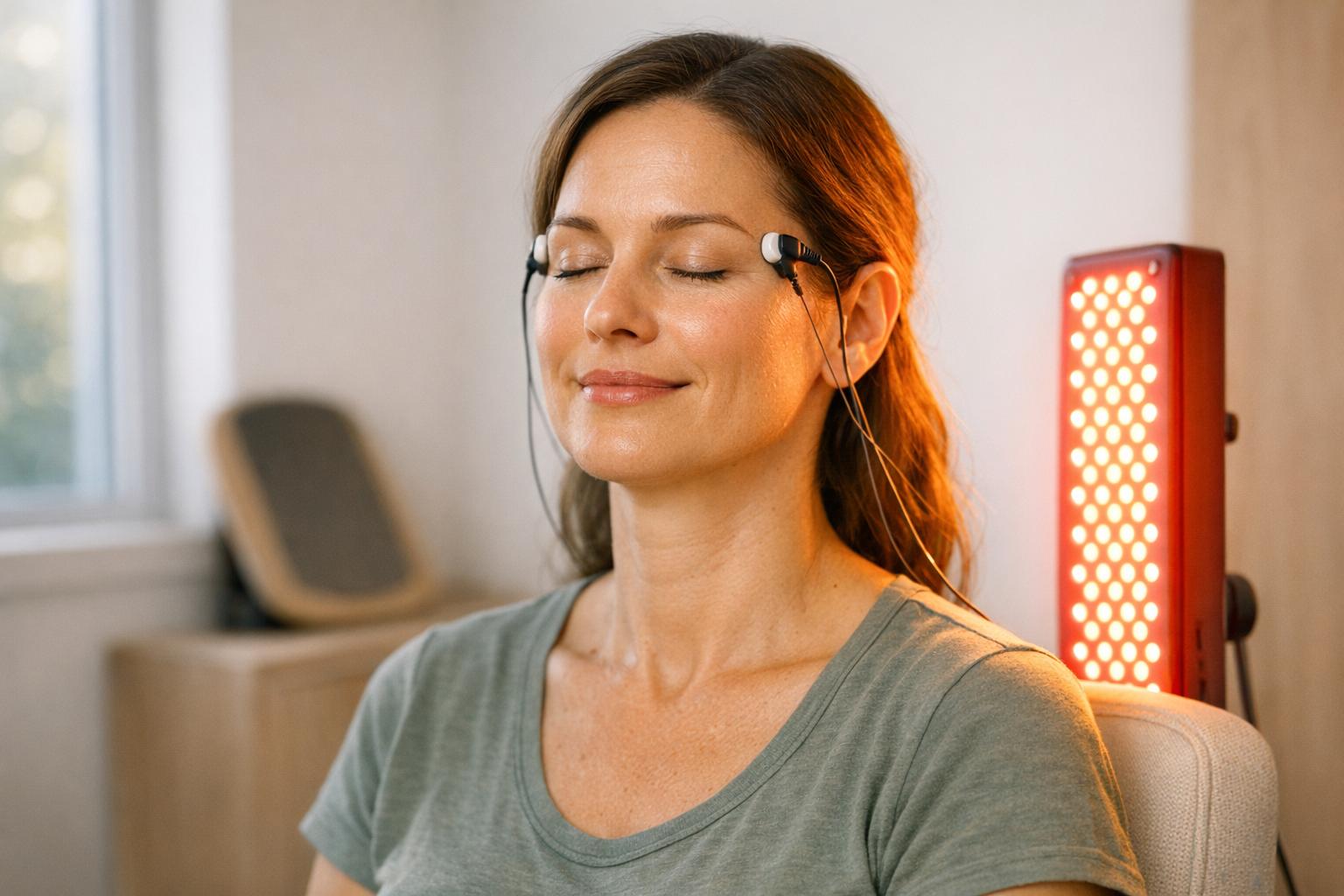
Neurofeedback works through operant conditioning, helping guide brain activity into healthier patterns by providing real-time feedback. This approach not only normalizes cortical activity but also promotes an increase in both gray and white matter volume. Complementing this, photobiomodulation (PBM) uses specific wavelengths of light to stimulate neural networks, aiding in cellular repair, improving blood flow, and reducing inflammation – key factors often involved in post-concussion syndrome.
“Training with neurofeedback aims to enable the individual to modify patterns of cortical activity and normalize brain activity.” – Canadian Agency for Drugs and Technologies in Health
Together, these therapies help restore the balance of the autonomic nervous system, which is essential for emotional stability. Neurofeedback specifically targets key emotional regulation centers, like the insula and amygdala, which are often disrupted after brain injuries. These combined methods pave the way for measurable improvements in emotional health, as supported by recent research.
Effectiveness in Emotional Recovery After Brain Injuries
Recovering emotionally after a brain injury can be a complex process. Statistics show that 10–20% of individuals with a single mild traumatic brain injury develop persistent post-concussion symptoms, while up to 40% may experience these symptoms for more than three months. A systematic review of neuromodulation techniques for mild TBI found that 13 out of 14 studies reported positive results, including reductions in depression, anxiety, and emotional instability.
In one randomized controlled trial involving 60 adults with moderate TBI, Neurofeedback-Assisted Exercise (NAE) demonstrated a significant impact. Using real-time EEG monitoring, participants received personalized visual and auditory feedback, leading to a 33.3% reduction in mood disturbances (POMS scores dropped from 37.2 to 24.8), compared to just 17.3% for traditional exercise. Another study focused on combat veterans found that 80% of those receiving real-time fMRI amygdala neurofeedback achieved clinically meaningful improvements in PTSD symptoms, compared to 38% in the control group.
Incorporation of Functional Neurology Techniques
Building on these findings, functional neurology incorporates neurofeedback and photobiomodulation into personalized treatment plans. For instance, practitioners may use amygdala neurofeedback with real-time fMRI or EEG during positive emotion tasks to enhance left amygdala activity, strengthening prefrontal connectivity and improving emotional regulation.
“Therapies like photobiomodulation target specific networks in the brain to stimulate healing, improve circulation, and reduce swelling and inflammation.” – Neurohealth Services
These non-invasive therapies address symptoms like irritability, anxiety, and depression. Since depression and headaches during the sub-acute phase are linked to longer recovery times, early use of neuromodulation can make a meaningful difference. Functional neurologists often combine neurofeedback and photobiomodulation with other therapies, such as vestibular rehabilitation and vision therapy, to support comprehensive emotional recovery.
At HML Chiropractic & Functional Care, a patient-first approach ensures that these neuromodulation techniques are tailored to meet individual needs, promoting emotional healing and recovery after brain injuries.
5. Personalized Treatment Plans with Mind-Body Integration
Focus on Neuroplasticity and Brain-Body Connection
Brain injuries are as unique as the individuals experiencing them, creating distinct patterns of dysfunction. Treatment plans are tailored to the specific neural pathways and responses of each patient, with neuroplasticity – the brain’s ability to reorganize itself – at the core of these strategies. When the limbic system becomes chronically activated due to injury or illness, it can lock the body into a constant “fight or flight” mode, making emotional regulation incredibly challenging.
“The brain has a tremendous capacity for repair and renewal, if it is given the right tools to do so.” – Sunjya Schweig, MD, California Center for Functional Medicine
Functional neurologists pinpoint which neurons are underperforming and use targeted therapies like vestibular rehabilitation, vision therapy, and sensory-motor exercises to rewire these pathways. This process also involves addressing the autonomic nervous system through techniques like vagus nerve resets, which help shift the body from a stress-driven state to a “rest, digest, and repair” mode, crucial for emotional recovery.
Effectiveness in Emotional Recovery After Brain Injuries
Research supports the success of personalized treatments. A systematic review of 16 studies revealed that 14 reported emotional improvements following tailored interventions, with 10 showing medium-to-large effects on emotional regulation.
These individualized plans focus on addressing the root causes of emotional challenges, leading to noticeable improvements. Functional neurology takes a comprehensive view, examining factors like medical history, genetics, nutrition, and environmental stressors to develop a strategy unique to each patient. This thorough assessment often uncovers hidden contributors to emotional symptoms, such as inflammation, hormonal imbalances, or nutritional deficiencies. By combining neuroplasticity principles with personalized care, patients receive a recovery plan designed specifically for their needs.
Patient-Centered Approach
Standard brain scans often miss the functional issues causing emotional symptoms. Functional neurology goes beyond these limitations, evaluating cognitive responses on an individual level. At HML Chiropractic & Functional Care, the focus is on creating customized treatment plans tailored to each patient rather than relying on one-size-fits-all protocols.
This approach empowers patients by involving them in their recovery process. Education about their condition and active participation in treatment not only boosts motivation but also enhances the effectiveness of neuroplastic remodeling. When patients engage in their recovery, clinicians can fine-tune therapies to better stimulate the brain’s healing processes.
Incorporation of Functional Neurology Techniques
Once assessments are complete, practitioners combine various therapies to maximize neural repair. Techniques like vestibular rehabilitation, neurofeedback, photobiomodulation, nutritional support, and sensory-motor exercises work together to promote neuroplasticity and emotional balance. Brain retraining programs target maladaptive neural pathways formed during chronic stress, while nutritional interventions address deficiencies that can negatively impact mood and cognition. Tools like Alpha-Stim provide additional support by stimulating nerve cells to help manage anxiety and depression.
Functional neurology emphasizes integration, treating vestibular function, vision, nutrition, and stress responses as interconnected elements of emotional health. This holistic approach equips the brain with the resources it needs to heal and regain stability.
Conclusion
Healing emotionally after a brain injury isn’t just about waiting for the brain to fix itself. The process relies on neuroplasticity – the brain’s ability to reorganize and form new connections when given the right stimulation and care. The therapeutic methods discussed earlier aim to tackle the root causes of emotional challenges rather than simply covering up the symptoms.
Recovery takes dedication. Building new neural pathways requires consistent, focused practice. As Dr. Stefanie N. Howell, Director of Research Integration at the Centre for Neuro Skills, puts it:
“Healing is not about waiting for neurons to regrow – it is about actively guiding the brain to build new roads, one meaningful task and one coordinated effort at a time”.
This intentional reshaping of the brain’s circuits allows for tailored treatments that address each person’s specific needs.
At HML Chiropractic & Functional Care, recovery from brain injuries is approached with precision and care. Through detailed assessments and personalized therapies – including nutritional support – their team develops recovery plans designed around your unique neurological needs. Instead of following generic protocols, they focus on specific neural pathways using a combination of techniques like vestibular rehabilitation, cognitive exercises, and targeted nutritional strategies.
Proper sleep and nutrition – especially omega-3 fatty acids and B vitamins – play a crucial role in creating the biochemical environment needed for brain repair and synaptic growth. By combining these foundational elements with targeted therapies, neuroplasticity becomes the driving force behind recovery. With expert guidance and consistent effort, achieving emotional stability and rebuilding neural health is within reach.
Even if years have passed since the injury, recovery is possible. With the right support and a commitment to the process, your brain can regain its optimal function. Take the first step — schedule a consultation with HML Functional Care and begin your personalized path to emotional and neurological healing.
FAQs
How long does emotional healing usually take?
Recovery on an emotional level after a brain injury is a deeply personal journey and looks different for everyone. While much of the healing typically occurs within the first two years, progress doesn’t stop there. The brain has an incredible ability to adjust and repair itself over time, a process known as neuroplasticity. How quickly or fully someone recovers often depends on the injury’s severity and the type of care and support they receive along the way.
How do you test for ANS dysregulation?
Testing for autonomic nervous system (ANS) issues involves checking how well it functions using various methods. Common approaches include heart rate variability (HRV) biofeedback, autonomic reflex testing, and advanced tools like INSiGHT scanning technologies. These techniques evaluate how the nervous system performs and adjusts, offering helpful information about its overall health.
Are neurofeedback and PBM safe?
Both neurofeedback and photobiomodulation (PBM) are regarded as safe when used properly. Neurofeedback is a noninvasive technique backed by clinical studies, while PBM relies on light wavelengths that are considered safe and show no major adverse effects. It’s always a good idea to consult a qualified professional to determine if these therapies are right for your individual situation.