
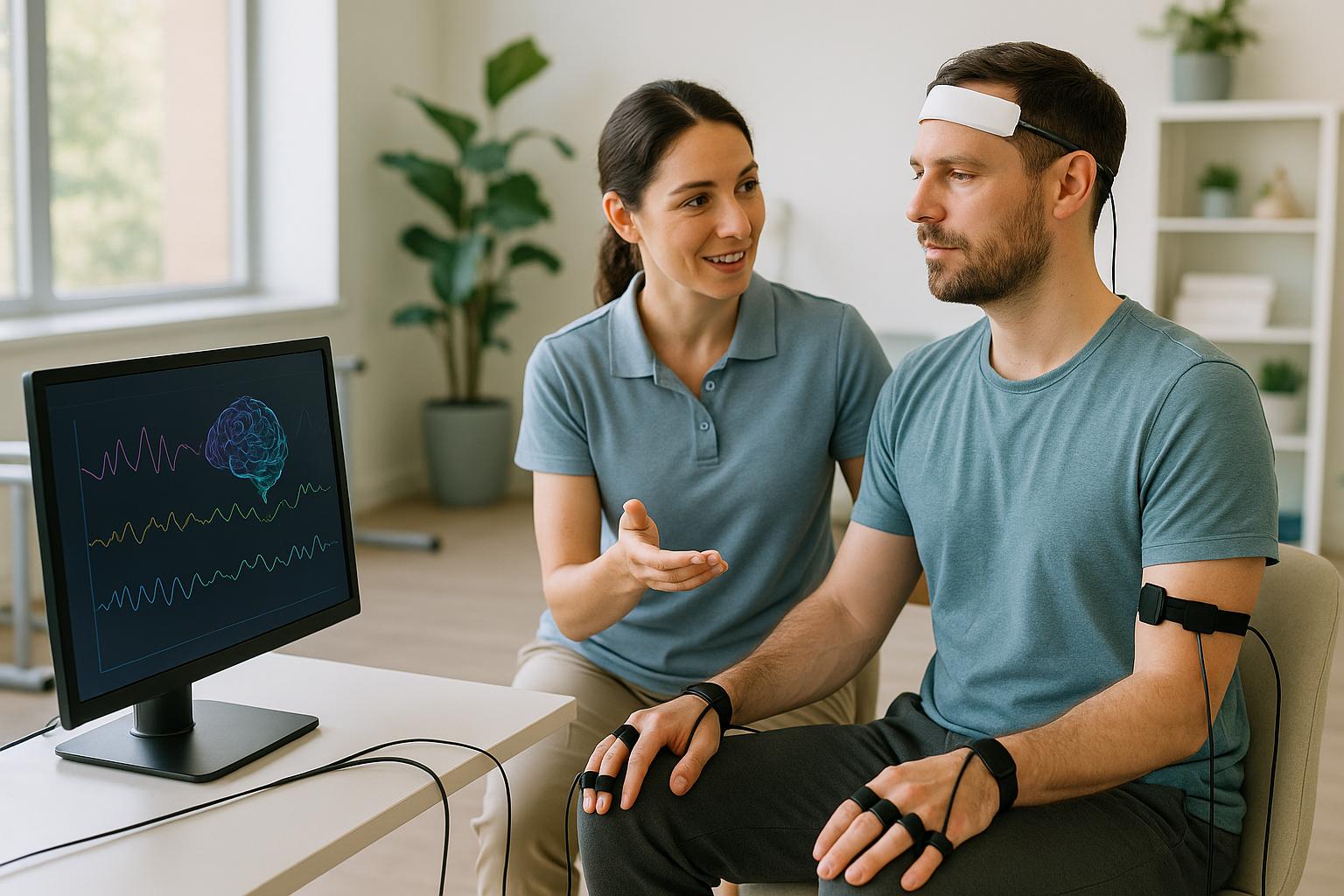
Biofeedback is a non-invasive approach that uses real-time information about physiological activity to help people become more aware of how their bodies respond. In neurological rehabilitation, researchers have studied biofeedback methods that track muscle activity, heart rate patterns, and electrical brain activity. While findings are promising in some areas, results vary by condition, technique, and study design.
How Biofeedback Works
Biofeedback turns physiological signals into visual, auditory, or other cues that a patient can observe during an activity. The goal is to help the person recognize patterns and practice more intentional responses. Three commonly studied approaches are electromyographic (EMG) biofeedback, heart rate variability (HRV) biofeedback, and EEG neurofeedback.
EMG, HRV, and EEG Biofeedback
EMG biofeedback measures electrical activity associated with muscle activation. In rehabilitation settings, it may help patients see subtle muscle activity during movement practice. Research has examined EMG biofeedback in stroke rehabilitation, cerebral palsy, and other motor conditions, with some studies reporting improvements when it is combined with conventional therapy. However, results are not consistent across all trials.
HRV biofeedback monitors changes in heart rate while a person practices paced breathing. It is often studied as a way to support stress regulation and autonomic nervous system awareness. Evidence suggests it may be useful for certain stress-related symptoms, although protocols and outcomes vary.
EEG neurofeedback uses scalp electrodes to measure patterns of electrical brain activity and provide real-time feedback. It has been studied in conditions such as ADHD, traumatic brain injury, migraines, and autism. The strength of evidence differs by condition, and more high-quality research is needed before broad conclusions can be made.
What the Research Still Needs to Answer
One of the clearest themes in the literature is the need for better standardization. Studies often use different session lengths, devices, feedback methods, and outcome measures. Many involve small groups or short follow-up periods, making it difficult to know how long benefits last or which patients are most likely to respond. Cost, equipment access, clinician training, and patient engagement can also affect real-world use.
Emerging Technology
Wearable sensors, extended-reality platforms, and AI-assisted systems are expanding the ways researchers can deliver and study biofeedback. These technologies may eventually make rehabilitation more personalized and accessible, including outside the clinic. For now, many of these applications should be viewed as emerging tools rather than established standards of neurological care.
How This Relates to HML Functional Care
Biofeedback is an important area of neurological rehabilitation research, but it is not listed among the confirmed services offered by HML Functional Care. At HML Functional Care in Lee’s Summit, Missouri, care centers on Functional Neurology, Chiropractic Care, and Functional Medicine. The practice uses individualized, non-invasive, brain-based approaches based on each patient’s needs and may incorporate services such as Interactive Metronome, Vestibular Therapy, Eye Movement Therapy, Senaptec, Cold Laser Therapy, or Hyperbaric Oxygen Therapy when appropriate.
For people dealing with ADHD, autism, traumatic brain injury, vertigo, dyslexia, Functional Neurological Disorder, chronic pain, or other concerns addressed by the practice, a personalized evaluation can help determine which HML services may fit their goals. Biofeedback or neurofeedback services should be discussed with a qualified provider who specifically offers those modalities.
The Bottom Line
Biofeedback gives researchers and clinicians a way to turn physiological information into immediate feedback that patients can use during rehabilitation. EMG, HRV, and EEG-based approaches each target different functions, and studies suggest potential benefits in selected situations. At the same time, mixed results and inconsistent protocols mean biofeedback should not be presented as a guaranteed or universally effective treatment. Individualized care and appropriate professional guidance remain essential.
Medical Disclaimer: This article is for educational purposes only and does not replace medical advice, diagnosis, or treatment. Speak with a qualified healthcare professional before beginning any new rehabilitation or biofeedback program.
Book an appointment with HML Chiropractic & Functional Care or call us at (816) 768-6000. We are located at 200 NE Missouri Rd, Suite 306, Lee’s Summit, MO 64086.