
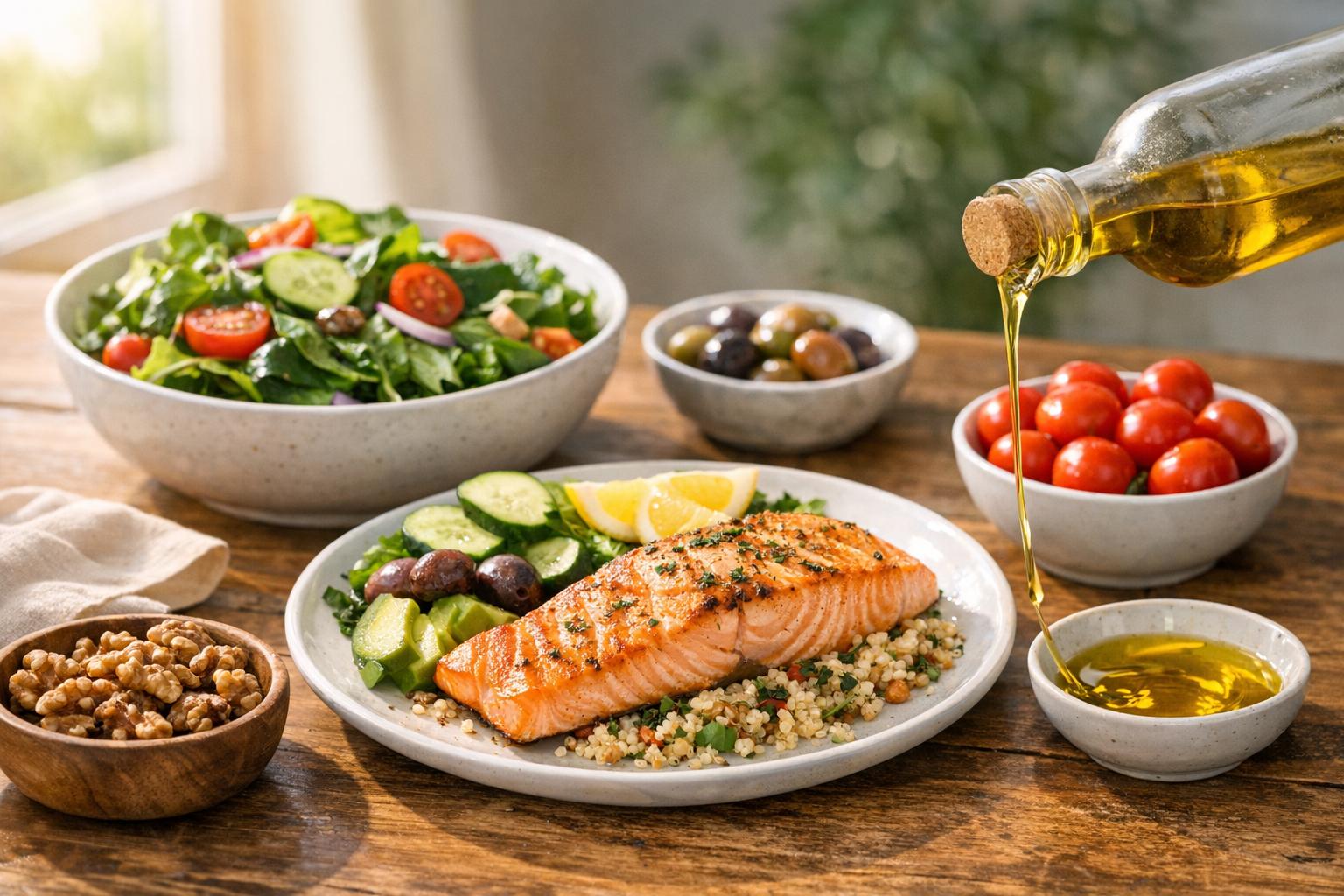
What you eat can directly affect Alzheimer’s progression.
Research shows that nearly 40% of Alzheimer’s cases are linked to lifestyle factors, including diet. Proper nutrition can slow cognitive decline, reduce inflammation, and improve brain health, while poor eating habits can worsen symptoms and accelerate the disease. Key highlights include:
- Omega-3 fatty acids (e.g., from salmon) reduce harmful brain proteins and lower Alzheimer’s risk by up to 64%.
- Antioxidants in foods like berries and green tea combat oxidative stress and protect brain cells.
- Deficiencies in vitamins D, B12, and E are common in Alzheimer’s patients and worsen the disease.
- Diets like the Mediterranean and MIND diets can cut Alzheimer’s risk by 23-53%.
- Poor diets high in sugar and saturated fats increase inflammation, oxidative stress, and memory loss.
For caregivers, focusing on nutrient-rich meals, monitoring eating habits, and addressing malnutrition can improve patients’ quality of life. Starting early with dietary changes, combined with exercise and stress management, offers the best outcomes.
How Diet Affects Alzheimer’s Disease
What you eat has a direct impact on your brain’s health. The foods you consume influence inflammation, oxidative stress, and the buildup of harmful proteins linked to Alzheimer’s disease. This connection between diet and disease progression offers patients and caregivers a potential way to help slow the condition’s advance.
The Connection Between Nutrients and Brain Function
Certain nutrients are essential for protecting brain health. Omega-3 fatty acids, such as DHA and EPA, found in fatty fish like salmon and mackerel, play a key role in reducing amyloid-beta (Aβ) buildup, a protein that damages brain cells. Studies suggest that long-term omega-3 supplementation can lower the risk of developing Alzheimer’s by 64%. These fatty acids are particularly effective in the early to moderate stages of the disease, helping maintain neuronal health.
Antioxidants are another major player. They fight oxidative stress, which damages brain tissue and accelerates cognitive decline. Foods rich in polyphenols, like berries, green tea, and dark chocolate, along with vitamins C and E, help protect neurons. Resveratrol, found in red wine, activates pathways in the brain that block inflammation while providing protective benefits. Additionally, vitamin D is critical. Severe deficiency (levels below 10 ng/ml) is strongly linked to Alzheimer’s, and supplementation has been shown to improve disease-related biomarkers.
Nutrients often work better together. For example, B vitamins like B12 and folate are crucial for cognitive health, but they need sufficient omega-3 levels to effectively boost memory. Research also shows that Alzheimer’s patients tend to have much lower levels of vitamin E compared to healthy individuals, which underscores how nutritional deficiencies can worsen the disease.
How Poor Diet Accelerates Cognitive Decline
While a nutrient-rich diet protects the brain, poor eating habits can speed up damage. The typical Western diet, loaded with refined sugars, saturated fats, and trans fats, creates a harmful environment in the brain. These foods increase inflammation, oxidative stress, and the buildup of Aβ peptides, all of which contribute to neurodegeneration. High sugar intake, in particular, causes glucose spikes that impair the hippocampus, the part of the brain responsible for memory and learning.
“A lot of diets high in saturated fats and more of the typical Western diet have time and time again been shown to be worse for cognitive aging and higher risk for Alzheimer’s disease.” – Dr. Bryan Neth, Neurologist, Mayo Clinic
Poor nutrition also raises cardiovascular risks, such as high cholesterol, hypertension, and diabetes, which further accelerate cognitive decline. A clinical study of elderly dementia patients found that 50.7% had vitamin D deficiency and 57.9% had high cholesterol levels. The gut-brain connection adds another layer of complexity: diets high in salt and sugar disrupt gut bacteria, triggering neuroinflammation that can affect brain health.
Signs of poor nutrition in Alzheimer’s patients include cravings for sweets, forgetting to eat, difficulty swallowing, or even refusing food altogether. These behaviors create a vicious cycle. Alarmingly, around 94% of people with dementia are at risk for malnutrition, and between 44% and 66.5% are already malnourished. This lack of proper nutrition only worsens the disease, making it even harder to manage.
Research-Backed Diets for Alzheimer’s Management
Scientific research suggests that specific diets can help slow cognitive decline. These eating patterns share common elements, such as focusing on whole, plant-based foods, healthy fats, and reducing processed ingredients, while offering distinct benefits for brain health.
Mediterranean Diet for Brain Health
The Mediterranean diet emphasizes olive oil, a variety of fruits, leafy greens, whole grains, legumes, nuts, seeds, and regular consumption of oily fish, while limiting red meat.
Research has shown that this diet can reduce dementia risk by as much as 23%, and eating fish twice a week may lower the risk by 41%. The Chicago Health and Aging Project found that participants adhering to a Mediterranean-style diet experienced a significantly lower risk of Alzheimer’s and slower cognitive decline. Similarly, the Kaiser Permanente Midlife Study revealed that individuals with high cholesterol (240 mg/dL or higher) during midlife had a 57% higher chance of developing Alzheimer’s decades later.
“Good quality fats are absolutely fundamental for brain health and health of the cardiovascular system.” – Dr. Bryan Neth, Neurologist, Mayo Clinic
Simple dietary changes can make a big difference. Swap butter for olive or rapeseed oil, prioritize vegetables over meat, and keep salt intake under 6 grams daily. Adding dark-colored fruits like blueberries and plenty of leafy greens is also associated with slower cognitive decline.
MIND and DASH Diets for Cognitive Protection
The MIND diet combines elements of the Mediterranean and DASH diets, specifically targeting dementia prevention. While the DASH diet promotes a wide variety of vegetables, fruits, low-fat dairy, and strict sodium limits, the MIND diet focuses on brain-friendly foods like leafy greens (at least 6 servings weekly) and berries (2 servings weekly), while limiting cheese and butter.
High adherence to the MIND diet has been linked to a 53% reduction in Alzheimer’s risk, and even moderate adherence can lower the risk by 35%. In a decade-long study, women who followed the MIND diet closely had an 8% lower risk of cognitive decline.
“Research suggests that following the MIND diet and Mediterranean diet may help lower the risk of cognitive decline and diseases like Alzheimer’s disease.” – Laura Wargo, RD, Registered Dietitian at Northwestern Medicine
To incorporate these diets, focus on eating plenty of leafy greens, choose berries over other fruits, limit red meat to fewer than 4 servings weekly, and keep butter intake under 1 tablespoon daily. The DASH diet also indirectly supports brain health by managing hypertension and cardiovascular risks.
Ketogenic Diet and Nutritional Supplements
The ketogenic diet offers an alternative energy source for the brain, using ketone bodies when glucose metabolism becomes impaired. This high-fat, low-carb diet has been shown to improve episodic, temporal, and semantic memory in patients with early to moderate Alzheimer’s.
Nutritional supplements can also play a role in cognitive support. A study published in June 2024 in Alzheimer’s Research & Therapy explored a comprehensive lifestyle intervention for early-stage Alzheimer’s patients. In this study, 51 participants (average age 73.5) followed a strict vegan diet supplemented with omega-3 fatty acids, curcumin, vitamin B12, magnesium L-threonate, and probiotics, alongside exercise and stress management. Remarkably, 10 out of 26 participants in the intervention group showed cognitive improvements, while none in the control group did.
Omega-3 supplements (DHA and EPA) are particularly effective when paired with adequate levels of B vitamins, as deficiencies in B6, B12, and folate can reduce their benefits. Probiotics may further aid cognitive function by influencing the gut-brain axis. Additionally, vitamin D supports immune cells in clearing amyloid-beta plaques, while resveratrol has been linked to improved brain volume and function.
Starting these nutritional changes early, during mild cognitive impairment or the initial stages of Alzheimer’s, is crucial for achieving the best outcomes. Caregivers should also keep an eye on weight changes, as unintended weight loss (common in 20% to 45% of Alzheimer’s patients) can signal more rapid cognitive decline.
Practical Dietary Tips for Caregivers and Patients
Daily Nutrition Guidelines for Alzheimer’s Care
Creating a brain-friendly diet does not have to be complicated or costly. Start by including one serving of leafy green vegetables daily and two to three servings of fatty fish each week to supply key omega-3 fatty acids like DHA. These manageable goals can help support cognitive health.
Incorporate a variety of colorful vegetables, like carrots, bell peppers, and tomatoes, throughout the day, and try to include berries at least twice a week. Instead of relying on salt, flavor meals with herbs and spices such as cinnamon, turmeric, and sage, which can also help with blood pressure management. Swap butter for olive oil, and stock up on affordable, time-saving staples like canned tuna, beans, oats, and frozen vegetables.
Pay attention to sudden changes in eating habits, such as an increased craving for sweets or a noticeable drop in food intake, as these could indicate nutritional challenges. To keep hydration levels up, offer water-rich foods or small servings of water regularly throughout the day.
Meal Planning and Simple Recipes
Building on these daily nutrition habits, meal planning can further ease the caregiving process while promoting cognitive well-being. Keeping meals simple and easy to manage benefits both caregivers and patients. For instance, serving finger foods like chicken nuggets, orange slices, or steamed broccoli can help patients maintain independence. Studies show that 70% of dementia patients eat more and gain weight when meals do not require utensils.
Frozen fruits and vegetables are excellent for simplifying meal prep. Batch-cooking can also save time. Try making spinach and feta egg muffins for quick breakfasts or preparing Mediterranean lentil soup with canned lentils and pre-cooked quinoa. For patients with swallowing difficulties, opt for soft-textured foods like scrambled eggs, cottage cheese, or mashed avocado. Using plain, non-patterned plates in colors that contrast with the food can help patients focus on their meals, and serving one item at a time can reduce feelings of overwhelm.
Easy snack options include walnuts, almonds, fresh berries, cucumber slices with hummus, or Greek yogurt topped with fruit. For patients struggling with weight loss, add calorie-dense options like guacamole or ranch dressing with veggies, or spread peanut butter on whole-grain toast.
Combining Nutrition with Functional Care
Pairing targeted nutrition with functional care amplifies the benefits for cognitive health. Managing Alzheimer’s effectively requires more than just one strategy. It demands a comprehensive approach. The disease stems from various biological factors, such as inflammation, vascular damage, and metabolic dysfunction. To address these, dietary changes must work hand-in-hand with other lifestyle interventions like exercise, stress management, and social engagement.
A June 2024 Harvard study involving 51 elderly individuals with early cognitive decline highlighted the power of this combined approach. Participants who followed a lifestyle intervention for 20 weeks showed remarkable progress: 40% of them improved on cognitive tests, while the control group experienced a decline.
“To get significant results on these cognitive tests in just 20 weeks, in just 50 patients, only altering lifestyle, to be very honest, was just shocking to me.” – Rudolph Tanzi
This method tackles the metabolic, inflammatory, and vascular contributors to brain decline. Steven Arnold, a Neurology Professor at Harvard Medical School, emphasized:
“If you do significantly change the metabolic, inflammatory, vascular milieu of the body and the brain, that is good for our brain function. And this diet, exercise, stress reduction/socialization intervention may work as well or better than some of the drugs we use for Alzheimer’s disease.” – Steven Arnold, Neurology Professor, Harvard Medical School
A Root-Cause Approach at HML Chiropractic & Functional Care
HML Chiropractic & Functional Care in Lee’s Summit, MO, takes a patient-centered, root-cause approach to health. Founded by Dr. Alex Nelson and Dr. Lauren Nelson, the practice combines functional neurology, chiropractic care, functional medicine, and neurological rehabilitation to address the underlying drivers of chronic health challenges, rather than simply managing symptoms.
Their integrated model begins with comprehensive health evaluations and personalized treatment plans. Through functional medicine, they assess and address systemic factors such as inflammation, immune function, and nervous system health. Through functional neurology and neurological rehabilitation, they work to restore and optimize brain and nervous system function. This whole-body approach aligns with the growing body of research showing that addressing multiple systems simultaneously yields the most meaningful outcomes for long-term health.
If you are concerned about cognitive health and want to explore a comprehensive, science-informed approach to care, HML Chiropractic & Functional Care is accepting new patients.
Take the First Step Toward Better Brain Health
Dr. Alex Nelson and Dr. Lauren Nelson at HML Chiropractic & Functional Care specialize in personalized, root-cause care that integrates functional neurology, chiropractic care, functional medicine, and neurological rehabilitation. If you or a loved one is looking for a comprehensive approach to neurological and overall health, they are here to help.
Conclusion
What we eat plays a powerful role in shaping brain health. Research indicates that sticking closely to a Mediterranean diet can lower the risk of mild cognitive impairment by 25% and Alzheimer’s disease by 29%. Meanwhile, the MIND diet has been shown to slow Alzheimer’s progression by an impressive 53%. These findings highlight how nutrition can act as a protective shield against cognitive decline.
But food does not work in isolation. A nutrient-dense diet supports gut health, reduces inflammation, and, when paired with good sleep, regular exercise, and stress management, can potentially delay the onset of cognitive issues.
“Nutrition is one of the pillars of functional medicine healthcare and may be an essential element in a personalized clinical intervention addressing brain function and cognitive health.” – IFM Medical and Editorial Content Team
Personalized strategies, developed with qualified healthcare professionals, can help target modifiable risk factors linked to faster cognitive decline, such as Type 2 diabetes and cardiovascular disease. Early and consistent action gives individuals and caregivers the best possible foundation for long-term brain health.
For comprehensive, personalized care that looks at the whole picture, consider scheduling a consultation with the team at HML Chiropractic & Functional Care in Lee’s Summit, MO.
FAQs
How do omega-3 fatty acids help lower the risk of Alzheimer’s disease?
Omega-3 fatty acids, especially DHA, are essential for maintaining brain health. They play a critical role in reducing inflammation, supporting the structure and function of brain cell membranes, and offering neuroprotective benefits. These effects may help limit the damage caused by amyloid plaques, which are known to contribute to the progression of Alzheimer’s disease.
Studies indicate that omega-3s could be particularly helpful for individuals with the APOE4 gene, a genetic variant linked to a higher risk of Alzheimer’s. Adding omega-3-rich foods, such as fatty fish, walnuts, and flaxseeds, to your diet is a straightforward and effective way to promote brain health and potentially lower the risk of developing Alzheimer’s.
What is the difference between the Mediterranean diet and the MIND diet for Alzheimer’s prevention?
The Mediterranean and MIND diets share a common foundation: an emphasis on plant-based foods, healthy fats like olive oil and nuts, whole grains, and fish, while keeping red meat to a minimum. However, the MIND diet takes things a step further by specifically focusing on brain health. It blends aspects of the Mediterranean and DASH diets, prioritizing foods such as leafy greens and berries, while cutting back on butter, cheese, pastries, and fried foods.
One standout feature of the MIND diet is its flexibility. It does not require frequent servings of fish or other specific foods, which makes it easier for many people to stick with. Research indicates that both diets are linked to slowing cognitive decline. However, the MIND diet may provide slightly better results, even if followed moderately, whereas the Mediterranean diet shows its strongest impact when followed very closely. The MIND diet zeroes in on neuroprotective foods, offering a straightforward approach to boosting brain health.
Why is it important to make dietary changes early in Alzheimer’s care?
Dietary adjustments in the early stages of Alzheimer’s care play a key role in supporting brain health. By supplying the brain with the right nutrients, such as those that combat inflammation and oxidative stress, these changes may help address two major contributors to cognitive decline. Acting early not only benefits brain function but also supports overall health, which could help slow the progression of symptoms.
A diet rich in antioxidants, healthy fats, and essential vitamins can make a meaningful difference. These nutrients are known to promote better brain function and enhance the overall quality of life, not just for patients but for caregivers as well. Starting these dietary changes early helps lay a solid foundation for managing the condition more effectively in the long run.
Book an appointment with HML Chiropractic & Functional Care or call us at (816) 768-6000. We are located at 200 NE Missouri Rd, Suite 306, Lee’s Summit, MO 64086.