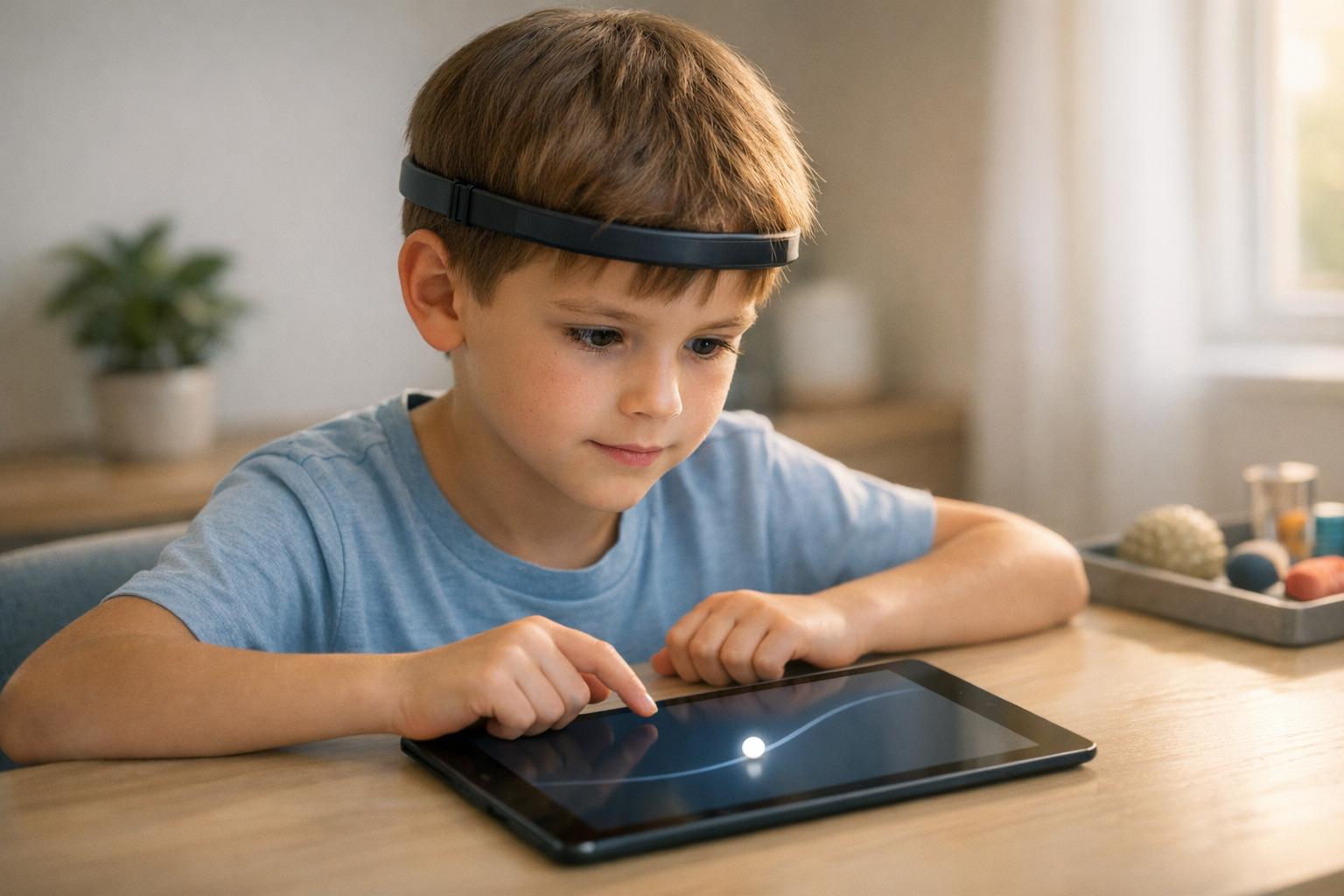
Functional neurology offers a brain-based approach to address learning disabilities like dyslexia and ADHD. By targeting how neurons communicate, rather than relying on medication or standard imaging, this method uses techniques like sensory exercises, neurofeedback, and cognitive training to improve brain function and learning outcomes. Research shows that over 77% of participants report improvements in symptoms after using these therapies.
Key Takeaways:
- Learning disabilities affect 8 to 10% of individuals, with dyslexia being the most common.
- These conditions often coexist with ADHD, anxiety, or depression, complicating treatment.
- Functional neurology uses tools like eye movement tracking and cognitive imaging to identify neural dysfunctions.
- Treatments include visual and vestibular training, sensory exercises, and neurofeedback.
- Early intervention is critical for better long-term results.
Functional neurology focuses on personalized care, offering non-medication solutions to help children overcome learning challenges and improve academic and emotional well-being.
Core Principles of Functional Neurology
Functional neurology provides a unique perspective on how neural communication impacts effective learning. Rather than relying solely on structural imaging, this approach focuses on how different parts of the brain interact and work together. The core idea is that imbalances in the brain’s functional networks can lead to learning difficulties. By understanding these dynamics, functional neurology lays the groundwork for targeted diagnostic and therapeutic strategies.
Central Integrative State (CIS) and Neural Function
The Central Integrative State (CIS) is a measure of the balance between excitatory and inhibitory inputs to a neuron or group of neurons at any moment. Essentially, CIS reflects a neuron’s readiness to activate. This refers to a nerve’s ability to fire being the sum of all its activating and inhibiting inputs.
In a healthy state, neurons maintain a resting membrane potential of around -65 mV. When this balance is disrupted, neurons can become either too active or too sluggish. These disruptions result in what functional neurologists describe as “functional lesions.” While these areas may appear normal in structural imaging, they fail to communicate effectively.
Treatment aims to restore the CIS of affected neurons to their optimal levels. Achieving this balance requires proper neuronal activation, along with sufficient oxygen and glucose.
Assessment Tools at HML Chiropractic & Functional Care
At HML Chiropractic & Functional Care, our practitioners use a comprehensive set of diagnostic tools that go beyond conventional imaging to pinpoint areas where neural communication falters. These include:
- RightEye System: Advanced eye-tracking technology that evaluates functional vision and brain health, identifies the root cause of reading problems, and measures visual skills in just 5 minutes in ways that a standard eye exam cannot.
- Senaptec Sensory Station: Provides a comprehensive sensory evaluation covering visual processing, reaction skills, and tracking abilities. In 20 minutes, this technology identifies which areas of the brain are involved in object tracking, information processing, and decision-making.
- Interactive Metronome: Challenges patients to synchronize whole-body motions to the millisecond, providing auditory and visual feedback to improve the timing and rhythm essential for cognitive processing and learning.
- Videooculography (VOG/VNG): Tracks eye movements to evaluate brainstem, cerebellum, and cortex function.
- Computerized Balance Testing (Posturography): Measures balance to assess sensory input from the proprioceptive and vestibular systems.
Another key factor in assessment is “fatigability,” which refers to how quickly the brain tires during stimulation. Treatment plans are carefully tailored to stay within the patient’s metabolic limits, avoiding overstimulation that could trigger issues like migraines or heightened anxiety.
Brain-Based Rehabilitation Techniques
Once assessments identify disruptions in neural communication, brain-based rehabilitation techniques come into play. Functional neurologists use targeted exercises to repeatedly activate specific neural pathways. This approach focuses on restoring connections that support learning, addressing timing issues at their root rather than relying on compensatory strategies.
Visual and Vestibular Integration Training
Visual timing exercises focus on the brain’s dorsal stream, often called the “where” pathway, which processes motion and spatial information. Research shows that children with dyslexia often experience delays of 20 to 40 milliseconds in their magnocellular neurons, which are crucial for smooth word tracking. These delays can disrupt reading fluency and coordination.
In 2016, Dr. Teri Lawton from the Perception Dynamics Institute studied 58 second-grade children with dyslexia using the PATH to Reading program. Over 20 weeks, with 20 to 30 hours of practice, reading speeds improved up to tenfold. The children also showed marked improvements in attention and both auditory and visual working memory.
Vestibular training complements these visual exercises by focusing on the vestibulo-ocular reflex (VOR), which helps stabilize images on the retina during head movements. A 2021 study led by Simona Caldani at CNRS Paris University involved 19 dyslexic children aged 8 to 11. Using BeonSolution software, the children completed four exercises for 16 minutes per session, twice a week over four weeks. The results showed significant improvements in oral reading fluency that persisted even during a one-month follow-up.
Sensory and Proprioceptive Exercises
Exercises targeting balance and hand-eye coordination strengthen how the brain processes bodily information. These sensory-motor integration activities enhance communication between the vestibular system, proprioceptive sensors in muscles and joints, and visual processing centers. This improved integration allows children to focus better and process information more efficiently. Physical activity also acts as a natural intervention, promoting cognitive development and overall health. Early identification of at-risk children ensures timely intervention before dysfunctional neural pathways become entrenched.
Neurosage and Systemic Neural Adaptation
HML Chiropractic & Functional Care offers Neurosage, a method of carefully applied neural stimulus known as Systemic Neural Adaptation. This approach is designed to help the brain excel in physical abilities and performance, enhance cognitive abilities to expand learning while minimizing learning disabilities, promote relaxation and stress regulation, and enable the body’s ability to heal itself and recover from physical and emotional injury.
Neuroplasticity and Repeated Neural Activation
The brain operates under the principle of use-dependent plasticity, meaning regularly used neural circuits grow stronger, while unused ones weaken. Repeated activation of these pathways fosters long-term potentiation (LTP), a process that reinforces synaptic connections. Over time, consistent stimulation leads to structural improvements in the brain.
For example, one study reported that 12 consecutive patients improved by at least two grade levels in reading after completing 30 to 35 sessions of neurofeedback and brain training. Consistency is key. Treatment protocols are also tailored to each child’s responsiveness and ability to sustain healthy reactions to stimulation, accounting for individual fatigability.
Brain Hemispheric Integration
HML also uses Brain Hemispheric Integration to stimulate one side of the brain over the other based on signs, symptoms, and examination findings. Utilizing sight, sound, smell, tactile stimulation, and proprioception, practitioners can increase function on one side of the brain to specify and maximize results for each patient.
Mild Hyperbaric Oxygen Therapy (HBOT)
As a complementary therapy, HML offers Mild Hyperbaric Oxygen Therapy (HBOT), a non-invasive and safe way to reduce inflammation, increase the body’s oxygen levels, and detoxify. Patients are placed in a controlled pressurized chamber that enables oxygen to reach areas of the body, including the brain, that may have had difficulty receiving sufficient oxygen.
Ready to explore how functional neurology can help your child? Schedule a consultation with HML Chiropractic & Functional Care today.
Outcomes of Functional Neurology for Learning Disabilities
Improvement in Cognitive and Academic Skills
Functional neurology has shown measurable success in improving cognitive and academic abilities in children with learning disabilities. Between 2013 and 2015, Teresa Iuculano and her research team at Stanford University conducted an 8-week, one-on-one math tutoring program for children aged 7 to 9 with Mathematical Learning Disabilities (MLD). After the program, fMRI scans revealed normalized activity in the parietal and prefrontal regions of the brain. Arithmetic accuracy significantly improved (P=0.005, Cohen’s d=0.86), and machine learning models showed a sharp drop in the ability to distinguish between the MLD and neurotypical groups, from 83.33% to 43.33%.
In a separate study, researchers from Lorestan University evaluated 53 students aged 7 to 10 diagnosed with Specific Learning Disorder. Participants underwent 20 sessions of either Cognitive Rehabilitation or Neurofeedback. The Cognitive Rehabilitation group showed significantly improved sustained attention and faster response times on the Continuous Performance Test (P<0.001).
Long-Term Benefits of Brain-Based Therapies
Beyond short-term cognitive and academic gains, brain-based therapies are designed to create lasting neurological improvements. Unlike medications that temporarily manage symptoms, these therapies engage neuroplasticity to restore balance in the brain’s systems, leading to enduring academic and behavioral changes.
A randomized controlled trial in 2025 studied 30 students with learning disabilities. Over six weeks, the experimental group participated in 12 sessions of neurofeedback-based cognitive training. The results showed sustained academic improvements (F(1,28)=22.51, p<0.001) that persisted even five months after the intervention.
Another double-blind randomized clinical trial revealed that children who underwent neurofeedback required significantly less medication 13 months after the intervention (p=0.012) compared to control groups. This reduction in medication dependency underscores how functional neurology targets the root causes of learning challenges, offering a more holistic solution than symptom management alone.
The Role of Personalized Care in Functional Neurology
Customizing Treatment Protocols for Better Results
Functional neurology takes a different approach from traditional methods, steering clear of one-size-fits-all solutions. Instead, practitioners craft individualized treatment plans based on detailed diagnostic tests that map out a child’s unique neural function. Tools like the RightEye system, Senaptec Sensory Station, Interactive Metronome, computerized balance testing, and comprehensive cognitive assessments pinpoint which neural networks are underperforming and which are functioning as they should.
This tailored approach is especially important because learning disabilities don’t present the same way in every child. Conditions like dyslexia and ADHD often overlap, making it even more critical to address individual needs. Dyslexia and ADHD co-occur in 30% to 50% of cases, and only about 40% of children with dyslexia and 20% of those with ADHD experience these conditions in isolation.
At HML, practitioners take a comprehensive look at the brain, mind, and body to uncover functional issues that might not show up in standard imaging. Once areas of concern are identified, targeted interventions such as ocular-motor training for reading challenges and cognitive exercises for attention issues are used to stimulate positive neuroplasticity.
The Importance of Early Intervention
Personalized protocols gain even more impact when combined with early intervention, which taps into the brain’s natural adaptability. The first three years of life are a crucial period for brain development, as neural circuits are at their most flexible. This window lays the groundwork for future learning, behavior, and overall health. By addressing neural function early, interventions can take advantage of this peak plasticity, helping to normalize development before permanent neural pathways are established.
Delaying intervention in hopes that a child will catch up can waste valuable developmental time. Studies show that starting physical and occupational therapy before age 2 leads to significantly better motor skill improvements compared to later starts. Early intervention can also prevent secondary issues, such as addressing communication challenges in young children with autism, which may reduce the likelihood of behavioral problems. Considering that approximately 1 in 6 children in the U.S. between ages 3 and 17 are affected by developmental disabilities, acting promptly can make a substantial difference.
Ready to explore how functional neurology can help your child? Schedule a consultation with HML Chiropractic & Functional Care today.
Conclusion
Functional neurology takes an evidence-based approach, focusing on the root issue: inefficient neuronal communication. By using targeted stimulation, it taps into the brain’s ability to adapt and change, known as plasticity. Research shows that 77% of participants see meaningful symptom improvement when functional neurology treatments are applied correctly.
The key to success lies in personalized care and acting early. Learning disorders impact between 5% and 20% of children, with conditions like dyslexia and ADHD overlapping in 30% to 50% of cases. This makes one-size-fits-all solutions ineffective. Tools such as the RightEye system and Senaptec Sensory Station provide detailed assessments of a child’s neural activity and visual processing, enabling tailored treatments that address their specific needs.
Early intervention takes advantage of the brain’s peak plasticity, helping to correct dysfunction before it becomes ingrained. Studies show that intensive cognitive therapies can make brain activity patterns statistically indistinguishable from those of neurotypical individuals.
At HML Chiropractic & Functional Care in Lee’s Summit, MO, comprehensive assessments and personalized treatment plans combine functional neurology with holistic care. Drs. Lauren and Alex, who have advanced training in Functional Medicine and Neurological Rehabilitation, work with each family to develop an individualized program. Acting sooner rather than later can lead to better cognitive functioning, stronger academic performance, and long-term developmental gains.
Frequently Asked Questions
What makes functional neurology different from traditional approaches to learning disabilities?
Functional neurology offers a different way to tackle learning disabilities by focusing on improving how the brain works, rather than just addressing the outward symptoms. While traditional treatments often rely on educational techniques, behavioral therapy, or medication, functional neurology digs deeper to uncover and address disruptions in brain activity and connectivity. This approach relies on tools like specialized assessments, neurofeedback, and targeted therapies to tap into neuroplasticity, the brain’s natural ability to adapt and reorganize itself. By strengthening neural pathways and addressing the core issues, it aims to create lasting changes in learning abilities, often surpassing the results of conventional methods.
What are the benefits of starting functional neurology early for children with learning disabilities?
Early action in functional neurology can make a profound difference for children with learning disabilities. Thanks to the brain’s neuroplasticity, specialized treatments can boost essential cognitive skills like memory, attention, and reading. Therapies focused on specific brain regions tied to comprehension and literacy can lead to noticeable improvements in academic performance. Addressing these challenges early also helps with the emotional and behavioral struggles that often accompany learning disabilities, such as frustration or diminished self-worth. Early intervention equips children with healthier coping mechanisms and builds their confidence, giving them the tools they need to thrive.
What treatments does HML Chiropractic & Functional Care offer for learning disabilities?
HML offers a comprehensive range of brain-based therapies tailored to each patient’s unique needs. These include Functional Neurology, Functional Medicine, RightEye vision assessment and training, Senaptec Sensory Station evaluation, Interactive Metronome therapy, Brain Hemispheric Integration, Neurosage (Systemic Neural Adaptation), Cold Laser Therapy (Photobiomodulation), and Mild Hyperbaric Oxygen Therapy. All treatment plans are individualized based on thorough diagnostic assessments.
Can functional neurology help adults with learning disabilities improve their cognitive skills?
Functional neurology has shown potential in helping adults with learning disabilities by improving cognitive abilities like memory, focus, and problem-solving. Approaches such as neurofeedback and cognitive rehabilitation are designed to support brain activity and enhance learning capabilities. These techniques are customized to address the unique challenges each person faces, making them a targeted solution for learning difficulties. For those seeking alternative methods to boost cognitive performance, functional neurology provides a personalized and holistic way to promote better brain health.
Take the first step toward helping your child unlock their full potential.
Book an appointment with HML Chiropractic & Functional Care online or call us at (816) 768-6000. Our practice is located at 200 NE Missouri Rd, Suite 306, Lee’s Summit, MO 64086.