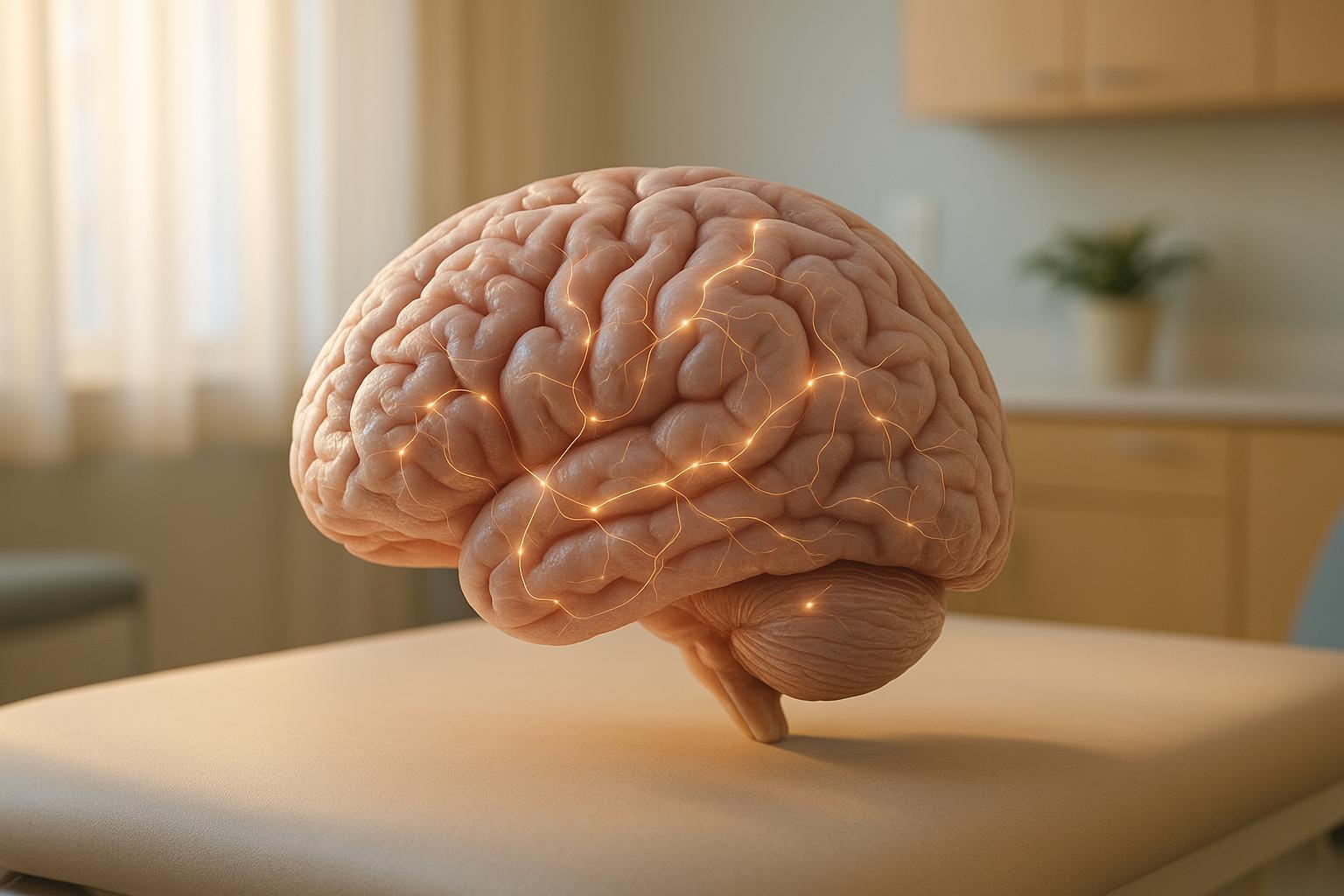
Neuroplasticity is the brain’s ability to reorganize itself by forming new neural connections. This process is key to restoring sensory function after injuries like nerve damage or strokes. Here’s what you need to know:
- What it does: Neuroplasticity helps the brain reroute signals, strengthen useful connections, and repair damaged pathways.
- How it works: Mechanisms like synaptic reorganization, axonal sprouting, and remyelination rebuild neural circuits. Neuromodulators like acetylcholine play a critical role in this process.
- Therapies: Techniques such as constraint-induced movement therapy (CIMT), functional electrical stimulation (FES), virtual reality (VR) training, and closed-loop vagus nerve stimulation (CL-VNS) use neuroplasticity to promote recovery.
- Challenges: Without proper rehabilitation, the brain may form maladaptive connections, leading to chronic pain or sensory deficits.
Understanding Neuroplasticity and Sensory Function
Building on the critical role neuroplasticity plays in recovery, let’s explore how it specifically impacts sensory function.
What Is Neuroplasticity?
Neuroplasticity refers to the brain’s remarkable ability to reorganize itself by forming new neural connections throughout a person’s life. Although this capability remains active into adulthood, it tends to diminish with age.
Think of the brain as a constantly evolving network that rewires itself based on experiences, learning, and changes in the environment. Processes like synaptic remodeling and the growth of dendritic spines create new pathways, which are essential for sensory recovery after an injury.
This adaptability is what makes sensory recovery possible. For instance, when a nerve is damaged or a stroke disrupts brain function, neuroplasticity steps in to reroute neural pathways and compensate for the lost functions.
How Sensory Loss Affects Neural Adaptation
When sensation is lost – whether due to nerve damage, a stroke, or another neurological issue – the brain doesn’t just sit idly by. It begins to adapt immediately, but this adaptation can take two very different paths.
On one hand, adaptive neuroplasticity supports recovery by strengthening alternative neural pathways, reorganizing sensory maps, and finding new ways to process sensory information. On the other hand, maladaptive neuroplasticity can lead to persistent sensory issues, abnormal sensations, or even chronic pain if the brain reinforces unhelpful or incorrect connections.
The outcome often depends on whether proper rehabilitation is provided. Without guided therapy, the brain might strengthen the wrong connections, leading to negative results. A fascinating study using closed-loop vagus nerve stimulation paired with rehabilitation found that blocking acetylcholine release during therapy eliminated recovery benefits. This highlights how central plasticity is key to successful sensory recovery.
Types of Neuroplasticity in Sensory Recovery
Two main types of neuroplasticity play a central role in restoring sensory function: experience-dependent plasticity and crossmodal plasticity.
- Experience-dependent plasticity happens when the brain adapts through targeted rehabilitation. Activities like repetitive movement training or sensory stimulation trigger synaptic changes, reinforcing neural pathways. This is why structured therapy often helps patients recovering from stroke or nerve injury regain sensation and movement. Repeated practice signals the brain that certain pathways are crucial, prompting cellular changes to strengthen those routes.
- Crossmodal plasticity occurs when the brain repurposes areas that have lost their primary sensory input to process information from other senses. For example, in individuals who are blind, the visual cortex may take on new roles, such as processing auditory or tactile information, enhancing the remaining senses.
These two forms of neuroplasticity often work together during sensory recovery. While experience-dependent plasticity reinforces the connections you actively train, crossmodal plasticity allows the brain to recruit additional resources from other sensory systems. Together, they create a dynamic and adaptive process that supports personalized and effective rehabilitation, offering a path to restoring sensory function.
How Neuroplasticity Restores Sensory Function
When sensory function is lost due to injury, the brain doesn’t just accept the loss – it actively works to repair and restore. This incredible ability stems from the brain’s capacity to reorganize and adapt through a process known as neuroplasticity.
At the core of this recovery lies synaptic reorganization, where the brain reroutes signals by forming new or stronger connections between neurons. Rehabilitation exercises, especially those designed to enhance this reorganization, can significantly improve sensory and motor abilities over time.
Two key processes play a major role in recovery: axonal sprouting and remyelination. Axonal sprouting allows new nerve fibers to grow and form connections, while remyelination restores the protective myelin sheath around nerves, ensuring better signal transmission. Supporting these processes are glial cells, such as Schwann cells and oligodendrocytes, which help create an environment that promotes nerve repair and regeneration.
Another critical factor is central plasticity, or the brain’s ability to reorganize itself. Studies show that even when peripheral nerves or muscles remain unchanged, enhancing central plasticity can lead to significant recovery.
A powerful example of this comes from research on closed-loop vagus nerve stimulation (CL-VNS) combined with rehabilitation exercises. In these studies, participants experienced notable improvements in tactile function 13 weeks after injury when CL-VNS was used alongside rehab (p = 1.26 × 10⁻³). Brain imaging revealed that the cortical regions responsible for sensory and motor functions had expanded, highlighting how the brain reorganizes to compensate for lost function. Importantly, acetylcholine – a neurotransmitter – was identified as a key player in this process. Blocking its release during therapy eliminated the recovery benefits, proving its essential role in driving neuroplasticity.
These neuromodulatory effects also set the stage for structural changes in the brain, like the growth of dendritic spines and modifications in cell adhesion. These changes help stabilize the new neural connections, ensuring that recovery is long-lasting.
Timing and context matter greatly when it comes to harnessing neuroplasticity. Intervening at the right moment can amplify the brain’s natural ability to adapt and even accelerate recovery beyond what traditional methods achieve. However, neuroplasticity isn’t always beneficial. If improper connections are reinforced, it can lead to maladaptive changes, causing persistent deficits or abnormal sensations. This is why targeted therapies are essential to guide the brain toward positive outcomes and avoid cementing problematic pathways.
Recovery outcomes depend on several factors, including the severity and location of the injury, the timing of interventions, and an individual’s capacity for neuroplasticity. Not all cases of sensory loss respond equally to these therapies, and ongoing research is working to identify which patients are most likely to benefit.
Neuroplasticity isn’t a passive process – it’s an active, dynamic force that can be shaped and directed through well-designed interventions. By leveraging mechanisms like synaptic reorganization, axonal sprouting, and neuromodulation, we’re opening the door to more effective strategies for restoring sensory function and improving rehabilitation outcomes.
Mechanisms Behind Neuroplastic Sensory Recovery
Synaptic Reorganization and Neural Regeneration
The brain’s ability to adapt and recover after sensory loss relies heavily on synaptic reorganization – a process where neural connections are strengthened, weakened, or entirely restructured. When sensory pathways are damaged, the brain doesn’t just give up; it works to create alternative routes for signals to travel, bypassing the damaged areas and forming new “detours” for information.
Two key players in this process are long-term potentiation (LTP) and long-term depression (LTD). LTP strengthens frequently used synaptic connections, ensuring essential pathways remain robust, while LTD weakens connections that are less useful, effectively “pruning” unnecessary synapses. This dynamic process, known as experience-dependent plasticity, is reinforced by repetitive, targeted activities that help rebuild critical neural circuits.
But reorganization alone isn’t enough. The brain also relies on neural regeneration, where damaged neurons and their support structures are repaired. In the peripheral nervous system, Schwann cells guide damaged nerve fibers as they regrow, while in the central nervous system, oligodendrocytes restore the myelin sheath, which is essential for efficient signal transmission along nerve fibers.
This repair process involves changes at the genetic level, the release of neurotrophic factors, and remodeling of the extracellular matrix. Neural stem cells and immune system modulators also play a role by fostering an environment that encourages repair rather than inflammation. These biological mechanisms are at the heart of therapies designed to restore sensory functions.
Together, synaptic reorganization and neural regeneration form a powerful duo. While reorganization helps the brain reroute signals around damaged areas, regeneration focuses on repairing the physical structures needed for proper function. Beyond these structural changes, the brain also reallocates sensory processing tasks, as seen in crossmodal plasticity.
Crossmodal Plasticity and Sensory Substitution
In addition to repairing damaged connections, the brain has a remarkable ability to repurpose unused regions to enhance other senses. This phenomenon, known as crossmodal plasticity, allows brain areas originally dedicated to a lost sense to take on new roles, processing input from remaining senses.
For instance, in individuals who lose their vision, areas of the brain that once processed visual information are reassigned to handle touch or hearing. This reallocation doesn’t change the physical structure of their fingers or ears but instead dedicates more neural resources to process these senses, resulting in heightened tactile sensitivity and sharper auditory processing.
Sensory substitution technologies take advantage of this adaptability by converting information from a lost sense into signals another sense can interpret. For example, some devices translate visual data into tactile patterns on the skin or auditory cues, which the brain learns to interpret as spatial information. Braille is a classic example: it transforms written language into tactile patterns that the brain “reads” through touch.
The effectiveness of sensory substitution depends on the brain’s ability to learn and adapt. With consistent practice, the brain forms new neural circuits to interpret these signals, enabling individuals to regain functional abilities and navigate their surroundings despite sensory loss. These mechanisms highlight the importance of personalized rehabilitation strategies in sensory recovery.
Neuromodulators and Their Role in Neural Adaptation
Neuromodulators, the brain’s chemical messengers, play a critical role in guiding neural adaptation and recovery. These molecules adjust how neurons communicate, fine-tuning the “volume” and “tone” of neural signals to support the brain’s ability to reorganize and repair itself.
Among these, acetylcholine is particularly vital. This neuromodulator enhances synaptic plasticity, supports learning and memory, and plays a key role in reshaping neural circuits during rehabilitation. Research on closed-loop vagus nerve stimulation has shown that when acetylcholine release is blocked during therapy, the benefits of recovery disappear entirely, underscoring its importance.
Timing is everything when it comes to neuromodulator release. Closed-loop vagus nerve stimulation delivers precisely timed electrical pulses to the vagus nerve during rehabilitation exercises, triggering acetylcholine release at just the right moment. This synchronization drives synaptic reorganization in the brain, improving sensorimotor recovery even when there’s no visible change in peripheral nerves or muscles.
Other neuromodulators, such as dopamine and serotonin, also play supportive roles in recovery. These chemicals influence mood, motivation, and attention – factors that are essential for effective neural reorganization, particularly in crossmodal plasticity and sensory substitution.
Therapies That Use Neuroplasticity for Sensory Recovery
Neuroplasticity has opened up exciting possibilities for therapies aimed at restoring sensory function after injuries. These approaches go beyond simply managing symptoms – they actively engage the brain’s ability to rewire itself, forming new connections and reinforcing existing pathways to adapt to sensory changes.
Main Neuroplasticity-Based Therapies
Constraint-Induced Movement Therapy (CIMT) involves restricting the use of an unaffected limb, compelling the injured one to take over. This repetitive use stimulates the brain to reorganize itself, expanding the neural networks dedicated to the affected limb. As a result, both motor skills and sensory abilities improve. Clinical studies have shown CIMT to be particularly effective for stroke survivors and individuals with unilateral limb weakness who still have some voluntary movement.
Functional Electrical Stimulation (FES) uses electrical impulses to activate nerves or muscles, which helps restore movement and sensory feedback. This stimulation strengthens neural circuits and encourages synaptic reorganization. It’s commonly used for patients recovering from spinal cord injuries or strokes, often leading to better muscle strength, coordination, and sensory perception.
Virtual Reality (VR) Training immerses patients in interactive environments where they perform repetitive, task-focused activities. These experiences promote the brain’s ability to adapt by forming and strengthening new neural connections. Research suggests VR-based rehabilitation can enhance sensory discrimination, proprioception, and functional recovery, especially in individuals with neurological injuries. The multisensory aspect of VR makes it a particularly engaging and effective tool.
Closed-Loop Vagus Nerve Stimulation (CL-VNS) combines vagus nerve stimulation with targeted rehabilitation exercises. This pairing triggers the release of neuromodulators like acetylcholine at precise moments, helping the brain reorganize and recover. Studies have shown that CL-VNS can significantly improve tactile sensation and motor function, with measurable changes in brain areas responsible for movement. Timing is critical – when researchers blocked acetylcholine during therapy, the recovery benefits disappeared entirely.
Each of these therapies requires consistent effort. CIMT demands patient motivation and some initial movement ability, while FES relies on specialized equipment. VR training offers a customizable and engaging option, but can be expensive and may require access to advanced technology. CL-VNS, while promising for chronic injuries, involves surgical implantation, and its long-term effects are still being studied.
When these therapies alone aren’t enough, technology offers additional tools for sensory recovery.
Sensory Substitution and Augmentation Devices
Technological devices provide alternative ways to restore sensory function. Sensory substitution devices replace lost sensory input with signals from a different sense, while augmentation devices enhance existing sensory inputs.
A well-known example of sensory substitution is the cochlear implant, which helps individuals with hearing loss. These devices convert sound into electrical signals that directly stimulate the auditory nerve, bypassing damaged parts of the ear. Over time, the brain learns to interpret these signals as sound through neuroplastic adaptation.
For individuals with blindness, tactile-visual substitution devices translate visual information into tactile patterns or auditory cues. With practice, the brain develops new circuits to process these signals, enabling users to navigate and recognize objects. Similarly, vibrotactile gloves help those with somatosensory deficits by converting spatial information into vibrations that the brain learns to interpret.
These devices rely on the brain’s ability to adapt, but their success depends on a learning period during which the brain adjusts to the new sensory inputs. This adaptation process itself drives neuroplastic changes, creating new ways for the brain to process sensory information.
Comparing Different Therapy Methods
Each therapy has unique strengths and limitations, making it important to match the approach with the patient’s specific needs. Here’s a comparison of some key methods:
| Therapy Method | Strengths | Limitations | Best Applications |
|---|---|---|---|
| Constraint-Induced Movement Therapy | Effective for motor and sensory recovery, especially after strokes; strong evidence base | Requires motivation and some movement ability; time-intensive | Stroke recovery, upper limb rehabilitation |
| Functional Electrical Stimulation | Activates muscles and neural pathways directly; helpful for severe paralysis | Needs specialized equipment; requires repeated sessions | Spinal cord injuries, motor and sensory deficits |
| Virtual Reality Training | Engaging, customizable, and supports repetitive practice | Expensive and requires technology access; may cause motion sickness | Stroke recovery, traumatic brain injuries, pediatric rehabilitation |
| Closed-Loop VNS + Rehabilitation | Boosts brain plasticity; works well with other therapies | Requires surgical implantation; still under research | Chronic nerve injuries, cases where traditional rehab has stalled |
| Sensory Substitution Devices | Helps compensate for sensory loss; uses the brain’s adaptability | Requires an adjustment period; not a cure and needs continuous use | Blindness, deafness, sensory deficits |
Experts emphasize the importance of starting rehabilitation early, focusing on intensive, task-specific activities to maximize neuroplasticity. Combining therapies often leads to better outcomes – for instance, pairing FES with VR or CL-VNS with physical therapy can amplify results. By leveraging neuroplasticity, these approaches aim to rebuild sensory function. Success depends on individualized treatment plans, regular progress evaluations, and active patient participation. Multidisciplinary teams and ongoing research continue to refine these methods, improving outcomes for a wide range of sensory recovery challenges.
HML Chiropractic & Functional Care: Applying Neuroplasticity Principles
At HML Chiropractic & Functional Care, the concept of neuroplasticity forms the foundation for restoring sensory function and improving overall health. Established by Dr. Alex Nelson and Dr. Lauren Nelson, this clinic goes beyond simply addressing symptoms. By blending functional neurology, chiropractic care, and functional medicine, they create personalized treatment plans that tap into the brain’s ability to rewire itself after an injury.
The clinic focuses on conditions where sensory processing and neurological functions are disrupted, such as traumatic brain injuries, autism, ADHD, learning disabilities, and chronic health issues. Rather than relying on a generic approach, they craft individualized rehabilitation programs designed to stimulate adaptive changes in the nervous system. These programs encourage the brain to reorganize itself, improving sensory and motor functions. This philosophy shapes every aspect of their care.
Functional Neurology for Sensory Recovery
Using neuroplasticity as a guide, the clinic’s functional neurology protocols aim to restore sensory function. This involves targeted interventions like movement therapies, sensory integration exercises, and neuromodulation techniques, all tailored to the unique neurological needs of each patient. These strategies promote experience-dependent plasticity, where specific exercises and interactions with the environment lead to positive neural changes.
For example, a patient recovering from a traumatic brain injury might engage in movement retraining exercises to rebuild motor-sensory pathways. Meanwhile, children with autism might participate in sensory integration therapy to help their nervous systems process sensory input more effectively. Every intervention is grounded in evidence, with a focus on driving measurable improvements by fostering brain adaptation rather than simply addressing surface-level issues.
The clinic also emphasizes the role of neuromodulators – chemicals in the brain that influence neural activity. Their therapies are designed to naturally boost the release of these neuromodulators, creating the ideal conditions for sensory restoration and neural adaptation.
Patient-Centered Sensory Rehabilitation
What makes HML Chiropractic & Functional Care stand out is its dedication to truly individualized care. Every patient begins their journey with a detailed assessment, including neurological exams, sensory testing, and functional evaluations. This process allows the team to understand not just the symptoms but also the underlying neurological causes.
“We take an all-encompassing approach to helping you overcome health problems, so you can truly live your best life.” – HML Chiropractic & Functional Care
Treatment plans are then tailored to each patient’s specific needs, recovery goals, and progress. For instance, someone recovering from a spinal cord injury will have a completely different rehabilitation plan compared to a child managing sensory challenges related to ADHD or autism.
Recovery is closely monitored through regular follow-ups, which include objective outcome measures and patient feedback. This allows the team to adjust treatment strategies as needed, recognizing that neuroplastic changes unfold at different paces for different individuals. Some patients may see quick progress, while others require more time or alternative methods. By staying flexible and responsive, the clinic ensures patients achieve the best possible outcomes.
Combined Care for Long-Term Health
HML Chiropractic & Functional Care takes an integrated approach that combines targeted neurology and personalized rehabilitation with chiropractic care and functional medicine. This ensures not just recovery but long-term wellness. They understand that sensory recovery is deeply connected to the overall health of the nervous system and the body as a whole.
“We combine functional neurology with family chiropractic care and functional medicine, to treat the ‘whole you.’ Because we don’t want you to simply recover. We want you to be stronger.” – HML Chiropractic & Functional Care
Chiropractic care focuses on spinal alignment, which supports nervous system function by improving the efficiency of nerve signal transmission between the brain and body. This alignment is critical for maintaining the sensory feedback loops that drive neuroplastic changes. Functional medicine complements this by addressing factors like nutrition, inflammation, and lifestyle habits that influence neurological health. By tackling issues such as metabolic imbalances or nutrient deficiencies, the practice creates an environment where the brain can adapt and heal effectively.
This holistic approach leads to lasting improvements that go beyond symptom relief. Patients not only regain lost sensory functions but also build resilience against future challenges, enjoying a better quality of life. The clinic is committed to empowering patients with the knowledge and tools they need to maintain their progress long after treatment ends.
“We are committed to not only helping you overcome your current health challenges but also to equip you with the tools and knowledge necessary to maintain and enhance your well-being in the long run.” – HML Chiropractic & Functional Care
For individuals dealing with chronic health conditions or those who haven’t found success with other treatments, this comprehensive approach offers a new path forward. It’s not just about managing symptoms – it’s about actively rebuilding function and achieving lasting change through the brain’s incredible ability to adapt. By applying neuroplasticity principles within a multidisciplinary framework, HML Chiropractic & Functional Care helps patients experience meaningful, long-term improvements in both sensory function and overall health.
Conclusion
Neuroplasticity plays a key role in sensory recovery after injury by reshaping neural pathways and forming new synaptic connections. This discovery has reshaped how we approach sensory loss. Research shows that central plasticity is a driving force in sensorimotor recovery, extending beyond the regeneration of peripheral nerves. In other words, the brain itself actively reorganizes its networks to restore function, even when peripheral nerves show no visible changes.
The growing body of evidence highlights the potential of neuroplasticity-based therapies. For example, studies on closed-loop vagus nerve stimulation combined with rehabilitation reveal that cortical circuits can improve tactile function. These therapies work by using precisely timed interventions to release neuromodulators like acetylcholine, which create the ideal environment for neural changes.
Rehabilitation exercises also play a crucial role by engaging patients in activities that actively reorganize neural pathways. This is not a passive process – it’s an active rebuilding of circuits through purposeful interaction with the environment. Personalized treatment plans further enhance this process, ensuring therapies align with each patient’s unique neurological profile.
Patient-centered care amplifies these neuroplastic effects by tailoring interventions to individual needs. A great example is HML Chiropractic & Functional Care, which combines functional neurology with comprehensive health strategies. This approach goes beyond addressing symptoms, focusing instead on the underlying factors that influence the brain’s ability to heal and adapt.
Looking ahead, advances in cellular and molecular research will refine sensory recovery methods even further. Understanding the roles of Schwann cells, oligodendrocytes, neurotrophic factors, and inflammatory signals will lead to more precise and effective treatments. For individuals dealing with traumatic brain injuries, spinal cord damage, or chronic sensory issues, these integrated strategies offer more than symptom relief – they provide a way to restore function by harnessing the brain’s natural ability to rewire itself.
Ultimately, targeted, evidence-based interventions can do more than restore sensory function – they can improve overall neurological health. By focusing on personalized care and addressing the whole person, healthcare providers can help patients regain not only their sensory capabilities but also their overall well-being. With these principles in mind, the path to recovery becomes one of rebuilding and renewal.
FAQs
How are neuroplasticity-based therapies customized to help restore sensory function after an injury?
Neuroplasticity-based therapies focus on creating personalized treatment plans that consider an individual’s specific injury, sensory difficulties, and recovery objectives. These therapies tap into the brain’s natural ability to adapt and reorganize, helping to improve function through carefully designed exercises and interventions.
At HML Chiropractic & Functional Care, the approach goes beyond just addressing the injury. Treatment plans are thoughtfully crafted to support the patient’s overall well-being. By tailoring care to each person, the path to restoring sensory function becomes both more effective and impactful.
How do neuromodulators like acetylcholine support neuroplasticity during rehabilitation?
Neuromodulators such as acetylcholine are key players in the brain’s ability to adapt and reorganize itself, particularly during rehabilitation. Acetylcholine sharpens focus and enhances attention – two crucial elements for learning and forming new neural connections. This ability to bolster concentration makes it easier for the brain to adjust and recover after an injury.
In sensory restoration therapies, acetylcholine plays a pivotal role by aiding communication between neurons. This supports the rewiring of neural pathways, a process that’s critical for regaining sensory abilities and improving overall function after trauma or neurological challenges.
How does neuroplasticity help people with sensory loss adapt to their surroundings?
Neuroplasticity, the brain’s ability to reorganize and create new neural connections, plays a key role in how individuals adapt to sensory loss. When one sense is compromised, the brain can rewire itself to heighten other senses – a phenomenon known as crossmodal plasticity. For instance, a person who loses their sight might develop sharper hearing or a more refined sense of touch as the brain reallocates its resources to compensate.
This incredible flexibility is often utilized in therapies aimed at restoring or enhancing sensory function after an injury. Through specific exercises and activities, individuals can activate neural pathways, encouraging recovery and improving their ability to engage with the world around them. At HML Chiropractic & Functional Care, these concepts are woven into tailored treatment plans, helping patients work toward their health and wellness goals.